





What's Happening?
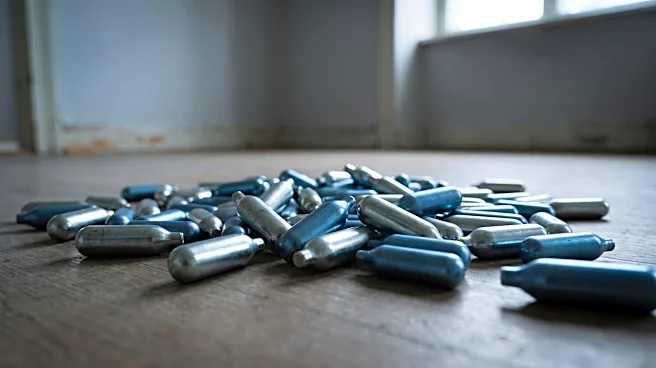
A Louisville mother is advocating for a federal ban on the retail sale of nitrous oxide for recreational purposes, following the death of her son, Christopher, in January 2025. Shawnna Boone found 72 nitrous oxide canisters in her son's home after he died
by suicide, leaving a letter indicating he was in pain. The U.S. Food and Drug Administration (FDA) warns against inhaling nitrous oxide due to severe health risks, including mental and neurological problems, and Boone noted her son suffered from paranoia before his death. While Kentucky banned retail sales of nitrous oxide at the beginning of 2026, it is not yet a federally scheduled substance. Boone recently traveled to Washington, D.C., to urge lawmakers to take stronger action. House Bill 7945, introduced in March, aims to ban nationwide sales of nitrous oxide to consumers for recreational use. The bill is sponsored by California Democratic Rep. Kevin Mullin and co-sponsored by Kentucky Democratic Rep. Morgan McGarvey.
Why It's Important?
This initiative highlights a critical public health concern regarding the accessibility and misuse of nitrous oxide. The push for a federal ban underscores the limitations of state-level regulations in addressing a nationwide issue, as the substance can still be obtained across state lines. The FDA's warning about severe health risks, coupled with personal tragedies like Christopher's death, emphasizes the urgent need for comprehensive regulatory action. The involvement of federal lawmakers, including Rep. Mullin and Rep. McGarvey, signifies a growing recognition of the problem at a national level. A federal ban could significantly reduce recreational access to nitrous oxide, potentially preventing further deaths and health complications. This effort also brings attention to the broader challenges of regulating substances that have legitimate industrial or medical uses but are prone to abuse, and the impact of such substances on mental health.
What's Next?
The immediate next step is the progression of House Bill 7945 through Congress. Shawnna Boone and other advocates will likely continue to lobby lawmakers, sharing personal stories and data to underscore the urgency of the issue. The bill's success will depend on bipartisan support and overcoming potential opposition from industries that produce or distribute nitrous oxide for legitimate purposes. If passed, the federal ban would necessitate the development and implementation of new regulations by relevant federal agencies, such as the FDA or DEA, to enforce the prohibition on recreational sales. This could involve stricter labeling, distribution controls, and penalties for violations. Even if the bill does not pass, the advocacy efforts could lead to increased public awareness, voluntary industry changes, or further state-level legislative actions, continuing the push for greater control over nitrous oxide sales.
Beyond the Headlines
The campaign for a federal ban on recreational nitrous oxide sales delves into the complex interplay between public health, individual liberty, and regulatory frameworks. While the immediate goal is to prevent misuse, the broader implications touch upon the responsibility of manufacturers and retailers in preventing their products from being diverted for harmful purposes. This situation also highlights the often-reactive nature of legislation in response to emerging public health crises, particularly when substances are easily accessible and their dangers are not widely understood. The emotional testimony of affected families, like Shawnna Boone's, plays a crucial role in galvanizing political will and shifting public perception. This effort could set a precedent for how the U.S. addresses other substances with dual uses, prompting a re-evaluation of existing regulations and a more proactive approach to identifying and mitigating potential public health threats from readily available chemicals.