




What's Happening?
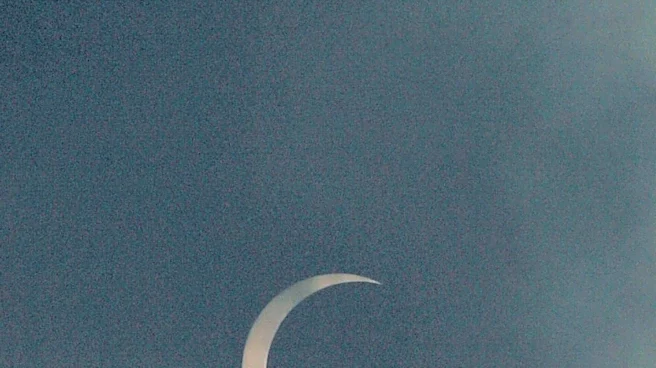
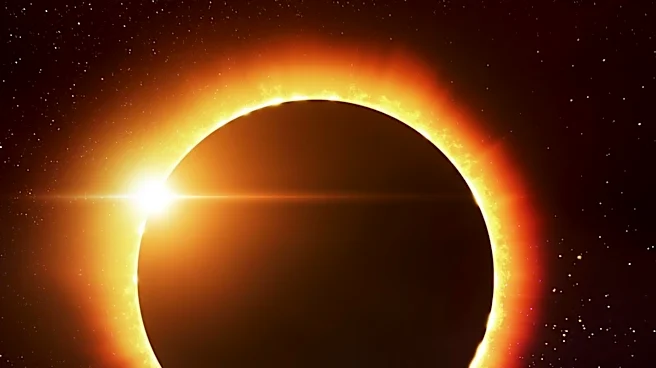
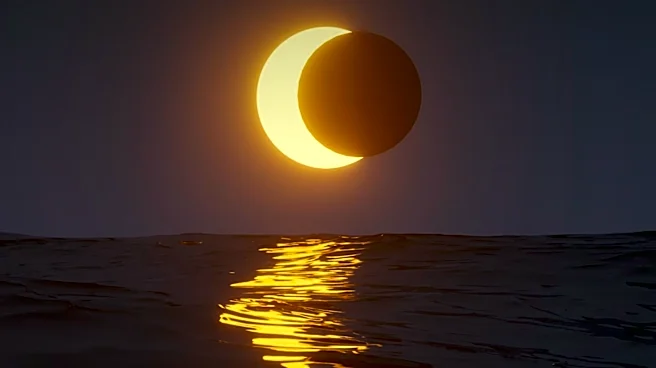
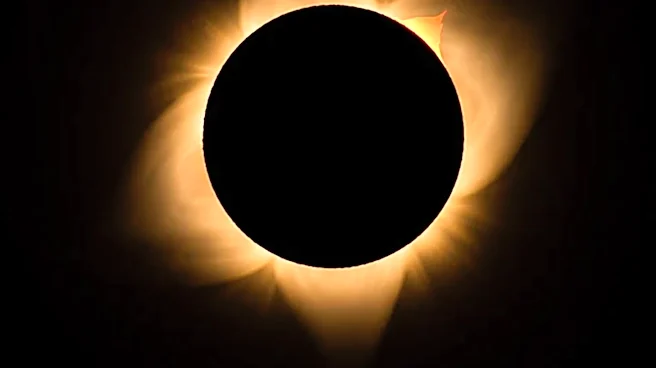
On August 12, 2026, a partial solar eclipse will be visible across parts of North America, with the northeastern United States experiencing the most significant views. Locations such as Fairbanks, Alaska, and Presque Isle, Maine, will see up to 37% and 28%
of the sun obscured, respectively. The eclipse will occur between 7:34 a.m. AKDT and 2:52 p.m. EDT, with varying degrees of visibility across different states. This celestial event, while not as dramatic as a total eclipse, offers a unique opportunity for skywatchers to observe the moon partially covering the sun.
Why It's Important?
Solar eclipses are significant astronomical events that capture public interest and provide educational opportunities about celestial mechanics and the solar system. This partial eclipse, although not total, allows for safe viewing experiences with proper equipment and can inspire interest in astronomy and science. It also serves as a reminder of the natural phenomena that connect people across regions, as millions will look skyward to witness the event. The eclipse can also boost local tourism in areas with optimal viewing conditions, as enthusiasts travel to experience the spectacle.
What's Next?
Following this partial eclipse, the next significant solar event visible from the U.S. will be on August 2, 2027, with a partial eclipse in Newfoundland, Canada. Future eclipses, including an annular eclipse in 2028 and a large partial eclipse in 2029, will continue to offer opportunities for observation and scientific study. These events encourage ongoing public engagement with astronomy and highlight the importance of scientific literacy and curiosity.