




What's Happening?
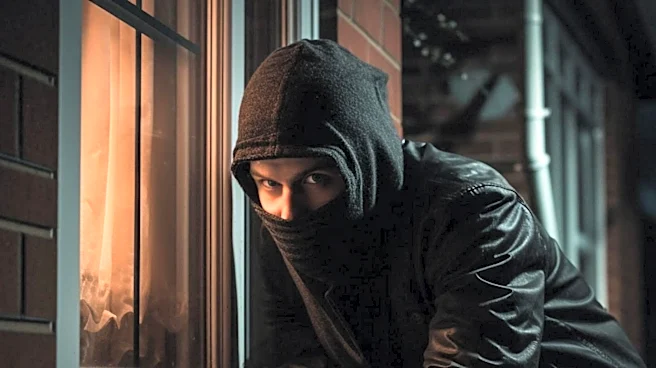
Philadelphia police are searching for a suspect wearing a Halloween-style mask who allegedly terrorized at least half a dozen people, primarily women, near City Hall. The incidents occurred over approximately 15 minutes on August 12, starting at 5:18
a.m. The suspect reportedly chased individuals, made threats, and asked one woman if she was 'ready to die,' causing her to injure her leg while fleeing. The man was also refused service at a Dunkin' for wearing the mask. Investigators noted that the suspect appeared to be filming the encounters with a cellphone, leading them to consider if the incidents are part of a social media trend. The Philadelphia Police Department's intelligence unit is involved in the investigation, and the suspect faces charges including terroristic threats and simple assault.
Why It's Important?
This series of incidents highlights a disturbing trend of public harassment and potential violence, possibly fueled by social media for viral content. The targeting of women and the aggressive nature of the threats create a significant public safety concern, particularly in a prominent urban area like Philadelphia's City Hall. The potential link to social media trends raises questions about the influence of online platforms on real-world behavior and the ethical implications of seeking notoriety through harmful acts. For law enforcement, it presents challenges in identifying motives and perpetrators who may be seeking online attention. For the public, it underscores the need for vigilance and reporting suspicious activities to ensure community safety.
What's Next?
Police are actively searching for the suspect and urging anyone with information to contact the Philadelphia Police Department. The involvement of the intelligence unit suggests a thorough investigation into the social media aspect, which could lead to broader discussions about platform accountability and content moderation. If apprehended, the suspect will face legal consequences for terroristic threats and assault. This incident may prompt increased police presence in the affected areas and public awareness campaigns about personal safety and reporting harassment. It could also lead to further examination of how online trends translate into offline criminal behavior.
Beyond the Headlines
The 'masked man' phenomenon, particularly when linked to social media, delves into the psychological motivations behind public disturbances and the pursuit of viral fame. The anonymity provided by a mask, combined with the potential for online validation, can embolden individuals to engage in behaviors they might otherwise avoid. This case raises ethical concerns about the responsibility of social media platforms in preventing the spread of content that incites or glorifies harmful acts. It also touches upon the broader societal impact of fear and intimidation in public spaces, affecting individuals' sense of security and freedom of movement. The incident serves as a stark reminder of the blurred lines between online and offline realities and the potential for digital trends to manifest in dangerous ways.