
What's Happening?
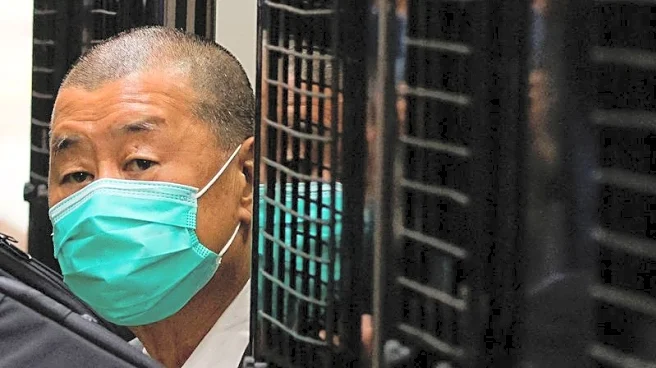
Jimmy Lai, a former media mogul and outspoken critic of China's Communist Party, has been sentenced to 20 years in prison in Hong Kong. Lai was convicted of conspiring to commit sedition and colluding
with foreign forces, charges that have been part of a broader crackdown on press freedoms in the region. His trial has been emblematic of the tensions between pro-democracy activists and the Chinese government, especially following the imposition of a national security law in Hong Kong in 2020. Lai, who founded the Apple Daily newspaper, has been a prominent figure in advocating for democratic freedoms and has faced significant legal challenges as a result.
Why It's Important?
The sentencing of Jimmy Lai is a critical development in the ongoing struggle for press and political freedoms in Hong Kong. It highlights the increasing pressure on media and activists in the region, raising concerns about the erosion of freedoms that were promised under the 'one country, two systems' framework. Lai's case has drawn international attention, with implications for U.S.-China relations and global perceptions of China's governance in Hong Kong. The outcome of this trial may influence future policies and the international community's response to human rights issues in the region.
What's Next?
Following Lai's sentencing, there may be increased scrutiny and diplomatic responses from Western governments, including the United States, which have previously expressed concerns over the national security law and its implications for Hong Kong's autonomy. Human rights organizations and international bodies are likely to continue advocating for Lai and other activists, potentially leading to further tensions between China and Western nations. The situation may also impact future legislative and policy decisions within Hong Kong as the government navigates the balance between security and freedoms.