






What's Happening?
Army Sgt. Louis F. Berendt, a U.S. soldier who died in a Japanese prisoner-of-war camp during World War II, has been identified and returned to Cass City, Michigan, for burial with full military honors. Berendt, who was 25 when he died in October 1942,
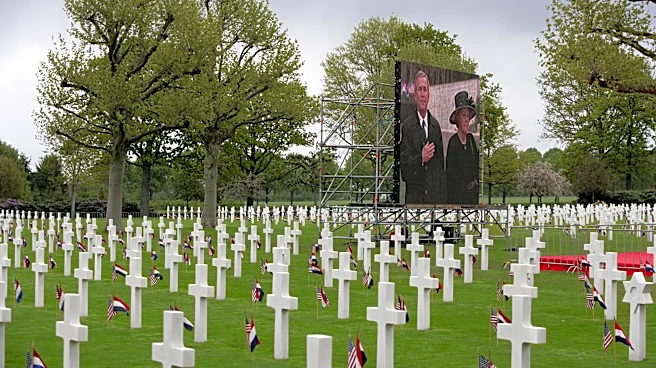
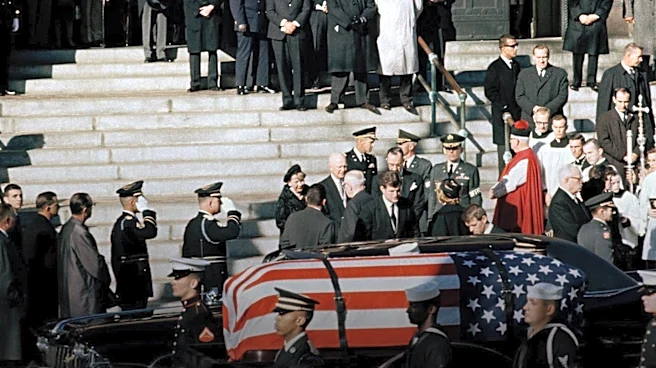
survived the Bataan Death March but succumbed to dysentery and malnutrition at the Cabanatuan camp in the Philippines. His remains were among hundreds of American war dead that could not be identified after the conflict and were interred as unknown soldiers at the Manila American Cemetery. Through advancements in forensic science, specifically by the Defense POW/MIA Accounting Agency (DPAA) in 2019, his remains were exhumed and formally identified on April 21, 2026. A funeral service was held on November 6, 2026, at Kranz Funeral Home in Cass City, followed by burial at Novesta Township Cemetery. The U.S. Army Honor Guard and Cass City Veterans of Foreign Wars Post 3644 provided military honors. Berendt was posthumously awarded several military decorations, including the Bronze Star Medal with an Oak Leaf Cluster, the Purple Heart, and the Prisoner of War Medal.
Why It's Important?
The identification and burial of Sgt. Louis F. Berendt underscore the ongoing national commitment to accounting for military personnel missing from past conflicts. This event provides closure for Berendt's family, who for over eight decades had no individually identified remains to bury, and highlights the significant advancements in forensic science that allow for such identifications. It also serves as a poignant reminder of the sacrifices made by U.S. service members during World War II, particularly those who endured the brutal conditions of the Bataan Death March and Japanese POW camps. The timing of the burial, just before Veterans Day, amplifies its message of remembrance and honor for all veterans. The DPAA's continued efforts to identify remains from complex sites like Cabanatuan demonstrate a dedication to ensuring that no soldier is left behind, reinforcing national values of respect and gratitude for military service.
What's Next?
The Defense POW/MIA Accounting Agency will continue its mission to identify American military personnel missing from past conflicts, utilizing historical research, forensic anthropology, DNA testing, and other scientific methods. This ongoing effort means that more families of missing service members may receive similar closure in the future. For the community of Cass City and Berendt's surviving relatives, including his nephew Raymond Berendt and four nieces, the burial marks a long-awaited conclusion to a chapter of their family history. The story of Sgt. Berendt will likely be integrated into local historical narratives and Veterans Day commemorations, serving as a testament to the enduring impact of war and the nation's commitment to its fallen heroes. The DPAA's work on the Cabanatuan project, which involves complex identifications due to common graves, will persist, potentially leading to further identifications from that site.
Beyond the Headlines
The identification of Sgt. Louis F. Berendt extends beyond a single military burial; it touches upon the broader ethical and cultural implications of national remembrance and the human cost of war. The meticulous work of forensic scientists in identifying remains from decades past reflects a societal commitment to honoring individual lives lost in service, even when the passage of time complicates such efforts. This case highlights the psychological and emotional toll on families who live for generations without definitive answers regarding their loved ones' fates. Furthermore, it underscores the evolving nature of historical accountability, as advancements in technology allow for the rectification of past unknowns. The story serves as a powerful educational tool, reminding current and future generations of the harsh realities of war, the resilience of those who served, and the persistent national endeavor to bring every soldier home, regardless of how much time has passed.