






What's Happening?
Target has issued a recall for certain baby wipes sold across the United States due to potential bacterial contamination. The recall, announced on June 4, 2026, involves wipes that may contain antibiotic-resistant bacteria, specifically Burkholderia cepacia
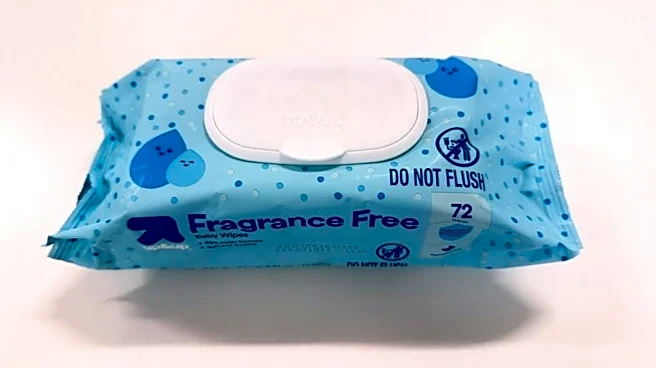
complex and Burkholderia gladioli. These bacteria can cause infections, particularly in healthcare settings, and are resistant to antibiotics, making them difficult to treat. The recall was initiated after Target and the manufacturer, Sapro Temizlik Urunleri, received customer complaints about product discoloration and symptoms such as skin or eye irritation. The FDA's investigation confirmed the presence of the bacteria. The affected products include Up & Up Fragrance Free Baby Wipes and Up & Up Fresh Cucumber Scented Baby Wipes, with specific manufacturing and expiration dates. Consumers are advised to stop using the wipes and return them to Target for a full refund.
Why It's Important?
The recall is significant due to the potential health risks posed by the contaminated wipes, especially to vulnerable populations such as newborns, infants, and individuals with compromised immune systems or chronic lung diseases. The presence of antibiotic-resistant bacteria in consumer products highlights ongoing public health challenges related to bacterial infections and antibiotic resistance. This incident underscores the importance of stringent quality control measures in manufacturing and the need for rapid response mechanisms to protect public health. The recall also reflects the responsibility of retailers like Target to ensure product safety and maintain consumer trust.
What's Next?
Consumers who have purchased the affected wipes are encouraged to return them to Target for a refund. Target has provided a contact number for further inquiries and is likely to continue monitoring the situation closely. The FDA may conduct further investigations to ensure compliance and prevent future occurrences. This recall may prompt other retailers and manufacturers to review their quality assurance processes to prevent similar issues. Public health agencies might also use this incident to raise awareness about the risks of antibiotic-resistant bacteria and the importance of proper hygiene practices.