






What's Happening?
The International Energy Agency (IEA) has issued a warning that Europe could face a significant jet fuel shortage within six weeks if the Strait of Hormuz remains closed. This critical chokepoint, which facilitates the transport of 20% of the world's
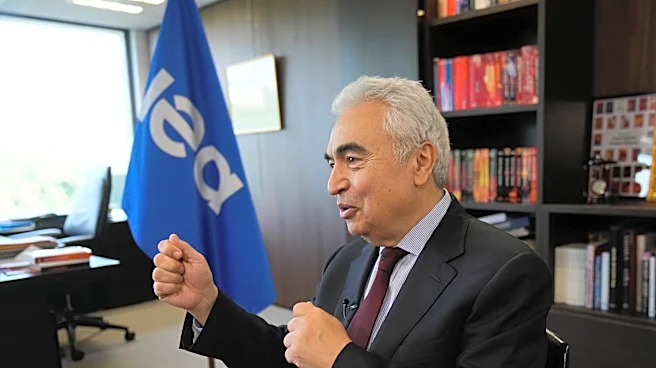
oil supply, has been shut down by Iran in retaliation for ongoing conflicts. The closure has already led to a halt in Iranian oil shipments following a U.S. naval blockade in the Gulf. IEA Executive Director Fatih Birol described the situation as the largest energy crisis ever faced, urging for the reopening of the strait to resume global oil and gas supplies. Europe, which heavily relies on Middle Eastern jet fuel, could see physical shortages by June, potentially leading to flight cancellations.
Why It's Important?
The closure of the Strait of Hormuz and the resulting jet fuel shortage could have severe implications for the global economy, particularly affecting Europe. The region's dependency on Middle Eastern jet fuel means that any prolonged disruption could lead to increased flight cancellations and higher airfares, impacting the travel industry and broader economic activities. The situation also poses a risk of exacerbating inflation and slowing economic growth worldwide. The IEA's warning highlights the vulnerability of global energy supplies to geopolitical tensions, underscoring the need for diversified energy sources and contingency planning.
What's Next?
The ongoing closure of the Strait of Hormuz and the breakdown of U.S.-Iranian peace talks suggest that the situation may not resolve quickly. European countries may need to seek alternative fuel sources to mitigate the impact, while airlines might have to adjust their schedules and pricing strategies. The IEA and other international bodies are likely to continue monitoring the situation closely, with potential diplomatic efforts to reopen the strait and stabilize oil supplies.