






What's Happening?
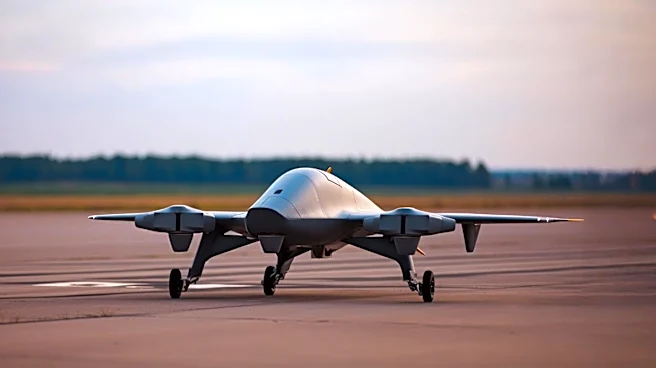
Ukraine has introduced a new interceptor drone designed to counter Russia's advanced jet-powered drones, such as the Geran-5. Ukrainian President Volodymyr Zelenskyy shared footage of the delta-wing interceptor, confirming its successful deployment by
the Security Service of Ukraine (SBU). This new drone features a turbojet engine, allowing it to achieve higher speeds necessary to engage faster Russian unmanned aerial vehicles (UAVs). The SBU reported that this interceptor successfully destroyed a Geran-5, which Ukrainian intelligence indicates can fly at speeds up to 373 mph and carry a 200-pound explosive warhead. This development marks a shift from Ukraine's earlier interceptor designs, which primarily consisted of smaller, slower quadcopters. The move comes as Russia has increasingly utilized jet-powered drones, forcing Kyiv to seek more sophisticated defensive solutions. Another Ukrainian manufacturer, Wild Hornets, also reported that its Sting S interceptor successfully downed a Geran-5, indicating multiple new systems are being fielded.
Why It's Important?
The introduction of these new high-speed interceptor drones is a critical development in Ukraine's air defense strategy. Russia's increased use of jet-powered drones, with their higher speeds and greater destructive potential, has posed a significant challenge to Ukraine's existing air defense systems. Previously, interception rates for jet models dropped to 60% compared to over 90% for propeller-driven drones. By developing and deploying faster interceptors, Ukraine aims to restore its defensive capabilities and mitigate the threat these advanced Russian drones pose to its cities and civilian populations. This technological advancement could reduce the reliance on more expensive and limited resources like fighter jets and surface-to-air missiles for drone interception, offering a more cost-effective and scalable solution. The success of these new interceptors could also influence future drone warfare strategies, emphasizing the need for rapid counter-drone technologies.
What's Next?
Following successful combat testing, Ukrainian manufacturers like Wild Hornets plan to begin mass production of these new interceptor drones. This mass production will be crucial for scaling up Ukraine's air defense capabilities against the growing threat of Russian jet-powered UAVs. Ukrainian authorities are working with multiple companies to design and produce these interceptors, suggesting a concerted effort to diversify and strengthen their drone defense arsenal. The continued deployment and refinement of these interceptors will likely lead to improved interception rates and reduced damage from Russian drone attacks. This technological arms race in drone warfare is expected to continue, with both sides developing new offensive and defensive capabilities. The effectiveness and affordability of these new interceptors will be key factors in their long-term impact on the conflict.
Beyond the Headlines
The shift towards high-speed interceptor drones highlights a significant evolution in modern warfare, particularly in the realm of unmanned systems. The increasing sophistication of offensive drones, such as Russia's jet-powered Geran-5, necessitates equally advanced defensive measures. This development underscores the ongoing technological innovation driven by conflict, where rapid adaptation and counter-innovation are paramount. The use of remotely operated interceptors, as described by Wild Hornets, also points to advancements in operational safety and efficiency, allowing pilots to control drones from secure locations. This technological arms race has broader implications for military doctrines worldwide, emphasizing the need for continuous investment in drone technology, both for offensive and defensive purposes. The lessons learned from Ukraine's experience in countering advanced drones will likely inform future military strategies and defense procurements globally.