
What's Happening?
The Department of Justice has initiated a criminal investigation into the Federal Reserve Chair, sparking significant backlash. This development comes amid heightened tensions in Minneapolis, where new
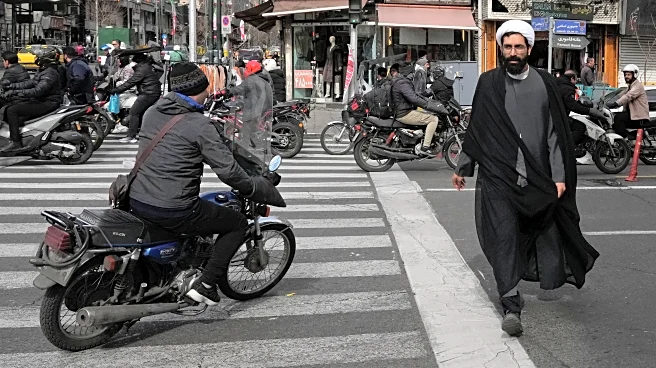
clashes have erupted over Immigration and Customs Enforcement (ICE) operations. Additionally, President Trump has responded to escalating anti-government protests in Iran, which have become increasingly violent. These events were highlighted in a recent broadcast, underscoring a period of domestic and international unrest. The investigation into the Federal Reserve Chair is particularly notable, as it could have significant implications for U.S. monetary policy and economic stability. Meanwhile, the protests in Minneapolis reflect ongoing national debates over immigration enforcement and community relations with law enforcement agencies.
Why It's Important?
The DOJ's investigation into the Federal Reserve Chair could have profound implications for the U.S. economy, potentially affecting monetary policy and financial markets. The Federal Reserve plays a crucial role in managing the economy, and any legal challenges to its leadership could create uncertainty. The clashes in Minneapolis over ICE operations highlight the persistent national debate on immigration policy and enforcement, which remains a contentious issue in American society. Furthermore, President Trump's response to the Iranian protests indicates the U.S. government's stance on international human rights and its potential influence on foreign policy. These developments collectively underscore a period of significant political and social tension both domestically and internationally.
What's Next?
The DOJ's investigation into the Federal Reserve Chair is likely to proceed with further scrutiny, potentially leading to legal proceedings or policy changes. In Minneapolis, community leaders and law enforcement may engage in dialogue to address the ongoing tensions related to ICE operations. On the international front, the U.S. government may continue to monitor the situation in Iran, potentially influencing diplomatic relations and foreign policy decisions. Stakeholders in these areas, including policymakers, community activists, and international diplomats, will be closely watching these developments to assess their impact and respond accordingly.