





What's Happening?
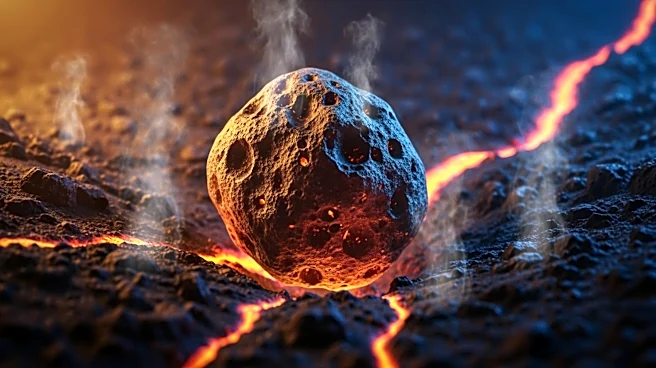
New research suggests that the asteroid impact that led to the extinction of the dinosaurs 66 million years ago may have created a hydrothermal vent system that lasted for up to eight million years. This finding, published in Communications Earth & Environment,
challenges previous models that estimated the hydrothermal activity at the Chicxulub Crater lasted only two million years. Scientists analyzed samples from the crater's peak ring, revealing a long span of hydrothermal activity. The porous, fractured rocks created by the impact provided microenvironments where microorganisms could thrive, protected from radiation and extreme temperatures. This discovery highlights the potential for life to flourish in extreme conditions and suggests similar processes could occur on other planets, such as Mars.
Why It's Important?
The study provides new insights into the resilience and adaptability of life in extreme environments, which has implications for understanding the origins of life on Earth. The prolonged hydrothermal activity at the Chicxulub Crater suggests that such environments could support life for extended periods, even after catastrophic events. This research also has potential implications for astrobiology, as it suggests that impact craters on other planets, like Mars, could have hosted similar hydrothermal systems, offering habitats for life. The findings could guide future space missions in identifying sites on other planets that are most likely to have supported life.
Beyond the Headlines
The research underscores the importance of studying Earth's geological history to inform our understanding of life's potential beyond our planet. The ability of life to persist in hydrothermal vent systems after a massive impact event suggests that life could be more resilient than previously thought. This resilience could be a key factor in the search for extraterrestrial life, as it expands the types of environments considered habitable. The study also highlights the interconnectedness of Earth's geological and biological history, providing a deeper understanding of how life has evolved in response to planetary changes.