
What's Happening?
Scientists from the European Centre for Disease Prevention and Control (ECDC), the European Chemicals Agency (ECHA), the European Environment Agency (EEA), and the European Commission are calling for stronger,
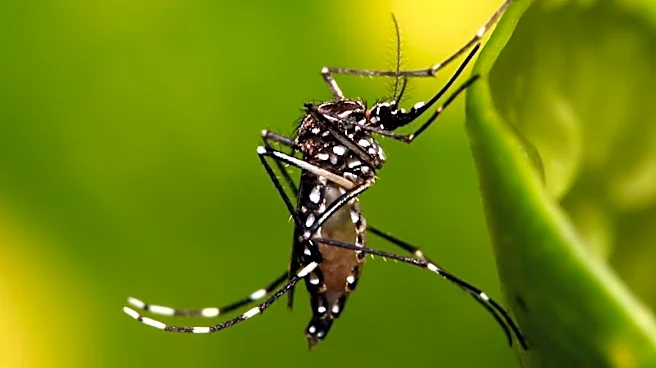
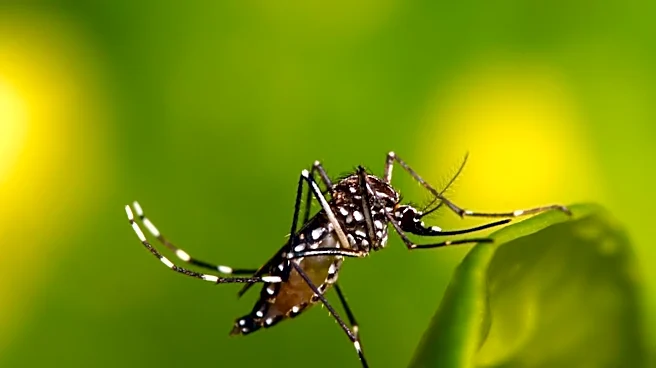
coordinated public health strategies to manage mosquito populations in Europe. Their commentary, published in Eurosurveillance on World Mosquito Day, highlights the increasing risks posed by diseases such as dengue, chikungunya, and West Nile virus. The spread of these diseases is linked to a combination of environmental transformation, climate change, and increased international travel. Warmer temperatures accelerate viral replication within mosquitoes, while changes in rainfall and water management create new breeding habitats. The presence of Aedes mosquitoes, which transmit dengue and chikungunya, and Culex mosquitoes, vectors for West Nile virus, has expanded across parts of Europe. The scientists emphasize that effective mosquito control is crucial for outbreak prevention, not just a response after transmission begins. They advocate for a 'One Health' framework, integrating public health, veterinary medicine, environmental protection, and urban planning to address these challenges comprehensively.
Why It's Important?
The increasing spread of mosquito-borne diseases in Europe has significant implications for global public health, including the United States. Increased international travel means that infected individuals or mosquitoes could potentially introduce these viruses to new regions, including the U.S., where suitable mosquito populations and environmental conditions might allow for local transmission. The call for a 'One Health' approach underscores the interconnectedness of human, animal, and environmental health, a concept that is increasingly relevant in addressing global health threats. If these diseases become more prevalent in Europe, it could lead to increased screening at U.S. borders, travel advisories, and a greater need for domestic surveillance and control measures. The challenges faced by Europe in developing consistent mosquito control systems highlight potential vulnerabilities that other nations, including the U.S., might also encounter in managing climate change-linked vector-borne diseases. This situation emphasizes the need for proactive, integrated strategies to prevent the establishment and spread of such diseases globally.
What's Next?
The European scientists are advocating for the implementation of sustainable, evidence-based, and integrated strategies for mosquito management. This includes eliminating or managing stagnant water where larvae develop, using larvicides, and potentially employing innovative methods like the sterile insect technique (SIT). They also stress the importance of personal protection measures, such as repellents and protective clothing. The commentary identifies major gaps in evidence regarding the cost-effectiveness of various interventions and the need for better cross-border coordination, especially given the fragmented governance of mosquito control across Europe. Future efforts will likely focus on strengthening surveillance, improving laboratory capacity, training personnel, and increasing investment in long-term prevention. The 'One Health' framework aims to connect information on human cases, animal infections, mosquito abundance, insecticide resistance, climate, and land use to detect emerging risks earlier and implement effective, ecosystem-protective interventions.
Beyond the Headlines
The rising threat of mosquito-borne diseases in Europe, exacerbated by climate change and increased global mobility, points to a broader ethical and public health challenge. The issue highlights the disproportionate impact of environmental changes on vulnerable populations and the need for equitable access to prevention and treatment. The reliance on chemical controls, while effective, raises concerns about potential environmental and health impacts, as well as the growing problem of insecticide resistance. This necessitates a shift towards more sustainable and integrated pest management approaches. Furthermore, the fragmented governance structures across nations underscore the political and logistical complexities of addressing transboundary health threats. The call for a 'One Health' approach is not merely a scientific recommendation but a philosophical shift, recognizing that human health cannot be isolated from the health of animals and the environment. This interconnectedness demands a re-evaluation of public policy to foster holistic solutions that consider ecological balance and global cooperation.