






What's Happening?
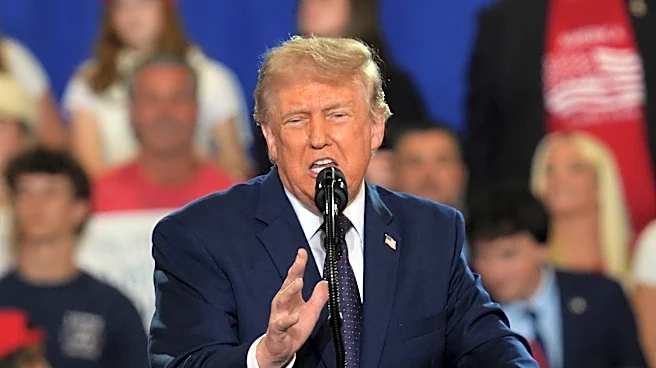
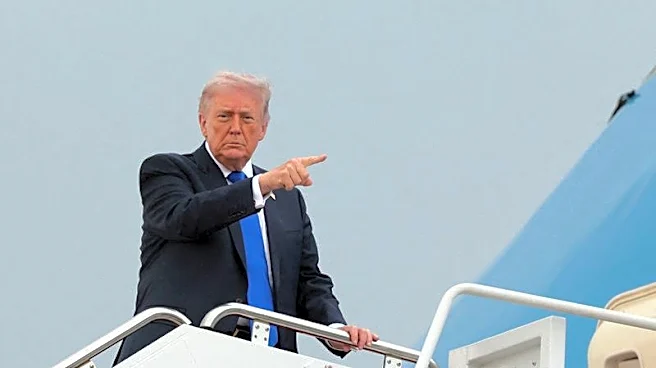
President Trump visited Rockland County, New York, to promote GOP-backed tax cuts, particularly highlighting the expansion of the state and local tax (SALT) deduction cap. During his visit, Trump credited Representative Mike Lawler for his persistent
efforts in pushing legislation that benefits New Yorkers by increasing the SALT deduction cap from $10,000 to $40,000. This change is part of a broader legislative package referred to as the 'One Big Beautiful Bill.' Trump emphasized that these tax cuts are designed to benefit workers, families, and small businesses in New York, asserting that Democrats opposed these measures. The visit also served as a platform for Trump to criticize New York Governor Kathy Hochul and House Minority Leader Hakeem Jeffries, while urging support for GOP candidates in the upcoming elections.
Why It's Important?
The expansion of the SALT deduction cap is significant for New Yorkers, particularly those in high-tax areas, as it potentially increases their tax refunds and reduces their overall tax burden. This move is part of a broader Republican strategy to appeal to voters in swing districts by offering tangible financial benefits. The visit underscores the importance of New York as a battleground state and highlights the GOP's focus on tax policy as a key issue in upcoming elections. By promoting these tax cuts, Trump aims to solidify support among middle-class voters and small business owners, who are seen as crucial demographics for the Republican Party. The event also reflects ongoing political tensions, with Trump using the platform to criticize Democratic leaders and policies.
What's Next?
As the election season approaches, the impact of the SALT deduction expansion and other tax policies will likely become a focal point in political campaigns. Representative Mike Lawler, facing a challenging re-election in a critical swing district, may leverage this legislative success to bolster his campaign. The broader Republican strategy will likely continue to emphasize economic policies that appeal to middle-class voters. Meanwhile, Democratic leaders may counter by highlighting other aspects of their economic agenda. The political discourse around tax policy and economic relief measures is expected to intensify, influencing voter sentiment and potentially shaping the outcome of upcoming elections.