




What's Happening?
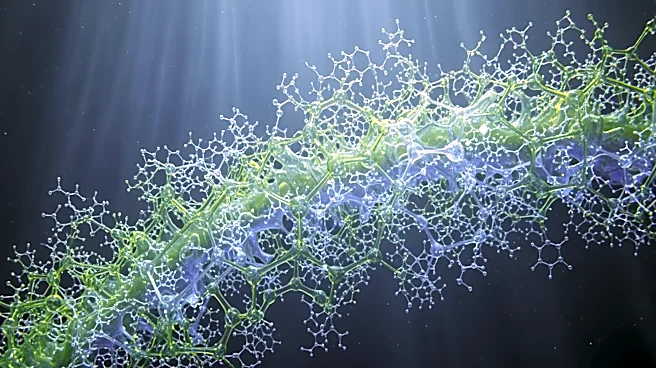
Researchers have discovered a novel anticancer molecule, jorumycidine, derived from the symbiotic relationship between a sea slug and its sponge prey. This molecule, characterized by an unusual six-ring structure, was identified in a study published in Communications
Chemistry. The research involved the marine mollusk Jorunna funebris and its associated sponge Haliclona species, collected from the Gulf of Thailand. The study utilized advanced techniques such as nuclear magnetic resonance spectroscopy and high-resolution mass spectrometry to characterize the compounds. Jorumycidine, a bis-tetrahydroisoquinoline alkaloid, showed strong anticancer activity, particularly against multiple myeloma cells, with a half-maximal inhibitory concentration of 13.8 nanomolar.
Why It's Important?
The discovery of jorumycidine is significant as it offers a new scaffold for anticancer drug development, potentially leading to more stable and effective treatments. The study highlights the importance of marine natural products in drug discovery, showcasing how chemical interactions among marine organisms can lead to the creation of novel bioactive molecules. This finding could inspire further research into marine symbiosis as a source of innovative therapies, addressing limitations related to chemical instability in existing compounds.
What's Next?
Further research is needed to explore the biosynthetic pathways of jorumycidine and its potential therapeutic uses. The study's findings may encourage more investigations into the ecological relationships among marine organisms, potentially leading to the discovery of additional bioactive compounds. Researchers may also focus on optimizing the synthesis and stability of jorumycidine for clinical applications.