




What's Happening?
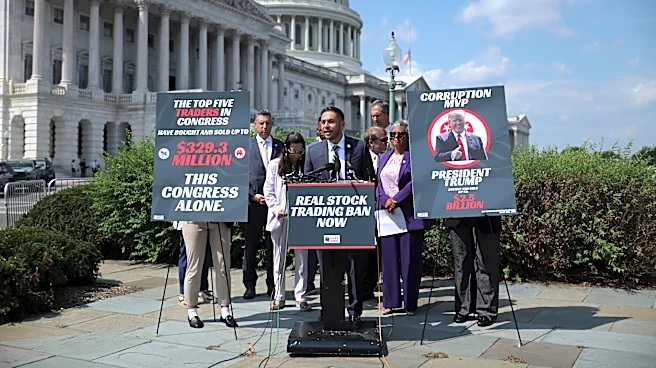
Representative Dan Newhouse sold up to $15,000 worth of Hershey ($HSY) stock on July 10. This transaction is part of a broader trend of congressional stock trading, where members of Congress have engaged in various stock market activities. Over the past
six months, there has been one recorded instance of a member of Congress trading $HSY stock, which was a sale. This activity is tracked through platforms that monitor congressional stock trading, providing data on these financial movements. The Hershey Company's stock has recently experienced a 4.0% decline, influenced by investor concerns over the company's guidance quality, signs of consumer weakness, and subsequent analyst downgrades and price target reductions. Despite an improved profit guidance in its latest quarterly update, the market focused on softer demand signals and pressures in convenience channels.
Why It's Important?
The stock trading activities of members of Congress, such as Representative Newhouse's sale of Hershey stock, are significant due to potential conflicts of interest and the implications for public trust. While the sale itself might be a routine financial decision, the timing and nature of such trades are often scrutinized, especially when they involve companies facing market challenges. The decline in Hershey's stock, driven by consumer weakness and analyst resets, highlights broader economic concerns affecting the U.S. consumer goods sector. This situation could indicate a cautious consumer environment, impacting sales and profitability for major companies. For investors, congressional trading data can offer insights, though it also raises questions about the fairness and transparency of financial markets when elected officials are involved.
What's Next?
The ongoing monitoring of congressional stock trading will likely continue to be a point of interest for transparency advocates and financial observers. As the market reacts to economic indicators and company-specific news, the financial decisions of lawmakers will remain under scrutiny. For Hershey, the company will need to address the concerns regarding consumer demand and convenience channel performance to regain investor confidence. Future earnings reports and management guidance will be critical in shaping market perception and stock performance. The broader implications for the U.S. consumer goods market will depend on the trajectory of consumer spending and economic stability.
Beyond the Headlines
The practice of members of Congress trading individual stocks raises ethical questions about potential insider trading or the appearance of impropriety. Even without direct evidence of illegal activity, the ability of lawmakers to trade stocks while having access to privileged information or influencing legislation can erode public trust in government and financial markets. This issue often fuels debates about stricter regulations on congressional stock ownership and trading, such as proposals for blind trusts or outright bans on individual stock trading for elected officials. The transparency provided by platforms tracking these trades is crucial for accountability, but the underlying ethical dilemma persists, highlighting the tension between personal financial freedom and public service.