






What's Happening?
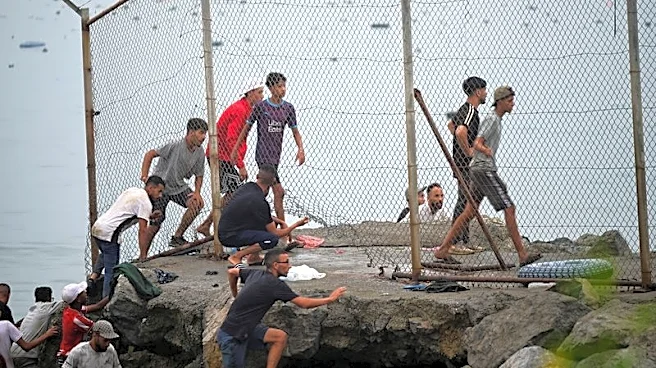
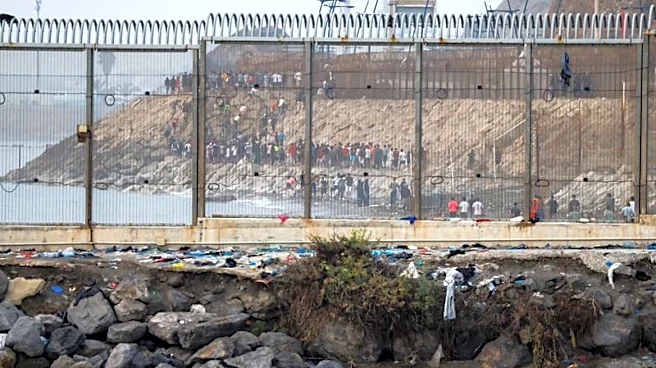
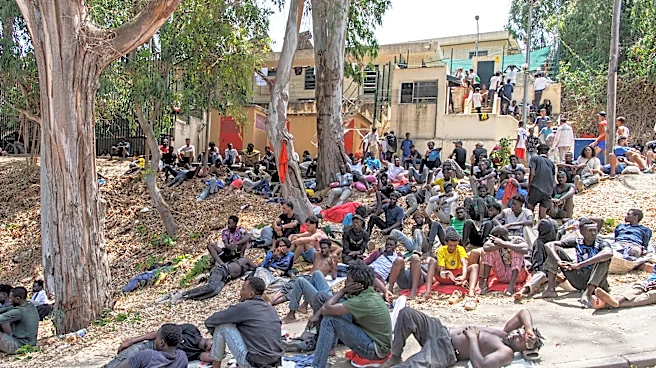
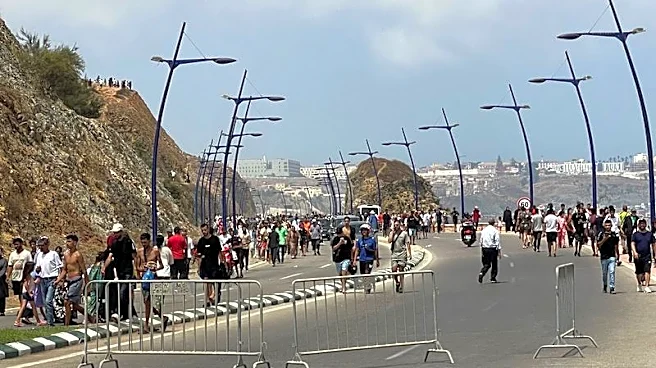
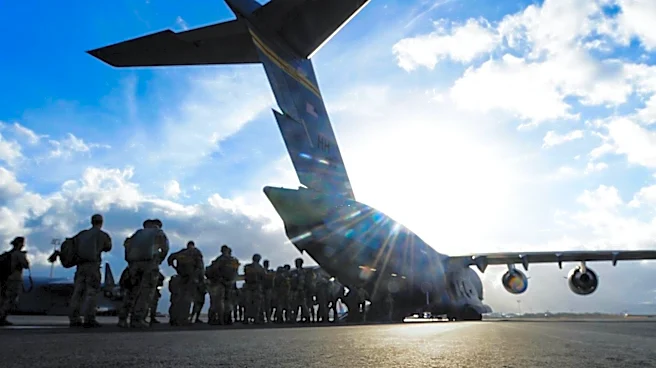
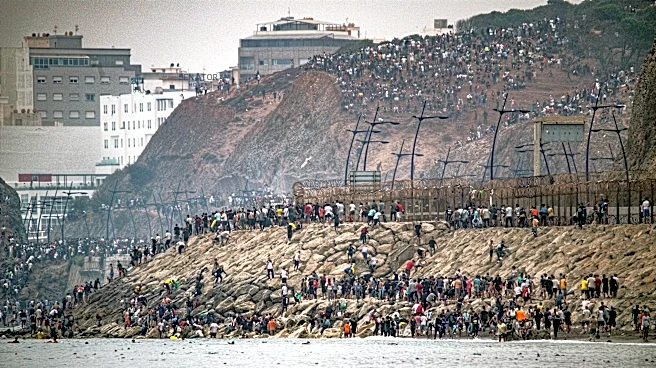
Spain has deployed military forces to its North African enclave of Ceuta following a massive influx of migrants from Morocco. Over 60,000 migrants entered Ceuta within 48 hours, overwhelming the city and prompting a humanitarian crisis. The surge is partly
attributed to a recent Spanish court ruling that prevents immediate deportation of migrants stopped at sea. The Spanish government reports that three-quarters of the migrants have already returned to Morocco, but the situation remains tense. Prime Minister Pedro Sanchez has described the event as an attack on Spain's territorial integrity, and the crisis has prompted responses from other European nations, including Italy and France.
Why It's Important?
This event underscores the ongoing challenges of migration and border security in Europe, particularly in regions with complex geopolitical dynamics like Ceuta. The crisis highlights the humanitarian and logistical challenges faced by border regions when dealing with sudden influxes of migrants. It also raises questions about the effectiveness of current immigration policies and the need for coordinated international responses. The situation in Ceuta could influence broader European immigration policies and impact political discourse, especially with upcoming elections in various countries.
What's Next?
The Spanish government is likely to continue its military presence in Ceuta to manage the situation. European countries may engage in diplomatic discussions to address the root causes of migration and improve border security measures. The crisis could lead to policy changes or new agreements within the European Union regarding migration and asylum seekers. Additionally, the situation may influence political narratives in upcoming elections, as leaders use the crisis to advocate for stricter immigration controls or humanitarian interventions.