



What's Happening?
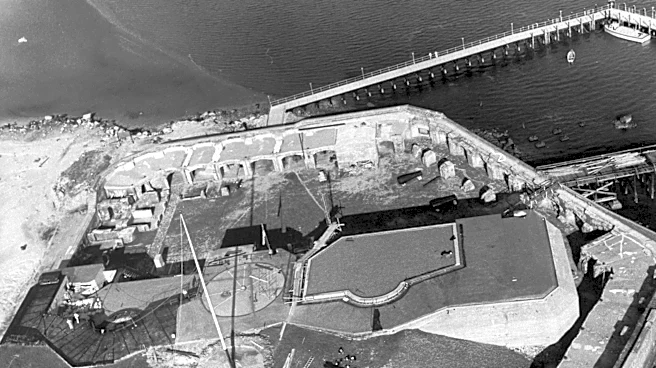
Congresswoman Claudia Tenney's bill, H.R. 1031, known as the Fort Ontario Holocaust Refugee Shelter National Historical Park Establishment Act, has successfully advanced out of the House Natural Resources Committee. The legislation aims to designate Fort Ontario in
Oswego, New York, as a national historical park. This designation seeks to preserve the site's significant history, particularly its role as a 'Safe Haven' for 982 Holocaust refugees between 1944 and 1946 during World War II. The bill proposes to incorporate specific parts of Fort Ontario into the National Park System while ensuring that state management of the site continues. Following its advancement from the committee, the bill is now eligible for consideration by the full House of Representatives. This move represents a crucial step in recognizing and protecting a unique aspect of American history related to refugee resettlement and the Holocaust.
Why It's Important?
The advancement of Representative Tenney's bill is significant for several reasons. Firstly, it underscores a national commitment to preserving historical sites that tell critical stories of humanitarian efforts and wartime refuge. Fort Ontario's role as the sole refugee camp in the United States for Holocaust survivors makes its preservation particularly vital for historical education and remembrance. Establishing it as a National Historical Park would elevate its status, potentially increasing federal funding and resources for its maintenance, interpretation, and accessibility to the public. This could also boost local tourism and economic activity in Oswego, New York, by drawing visitors interested in its unique historical narrative. Furthermore, the bill's progress reflects ongoing legislative efforts to acknowledge and commemorate the diverse experiences of those affected by global conflicts and the American response to humanitarian crises, reinforcing national values of compassion and historical accountability.
What's Next?
The next step for H.R. 1031, the Fort Ontario Holocaust Refugee Shelter National Historical Park Establishment Act, is consideration by the full House of Representatives. If the bill passes the House, it will then move to the Senate for their review and vote. Should it successfully pass both chambers of Congress, it would then be sent to the President for his signature to become law. The process involves further debate and potential amendments in both the House and Senate. Stakeholders, including historical preservation groups, local community leaders in Oswego, and organizations dedicated to Holocaust remembrance, will likely continue to advocate for its passage. The bill's journey through Congress will determine the future federal recognition and protection of Fort Ontario's historical legacy.
Beyond the Headlines
Beyond the immediate legislative action, the potential establishment of Fort Ontario as a National Historical Park carries deeper implications for national memory and identity. It highlights a lesser-known chapter of American involvement in World War II and the Holocaust, offering a tangible link to the nation's role as a sanctuary. This designation could foster greater public awareness and educational opportunities about refugee experiences, the complexities of wartime policies, and the enduring impact of historical events on contemporary society. Ethically, it reinforces the importance of remembering past humanitarian crises and the lessons learned from them. Legally, it sets a precedent for how sites of significant social and humanitarian history are integrated into the national park system, potentially influencing future preservation efforts for similar sites across the country. Culturally, it contributes to a more comprehensive understanding of American history, acknowledging both its triumphs and its challenges in responding to global human suffering.