
What's Happening?
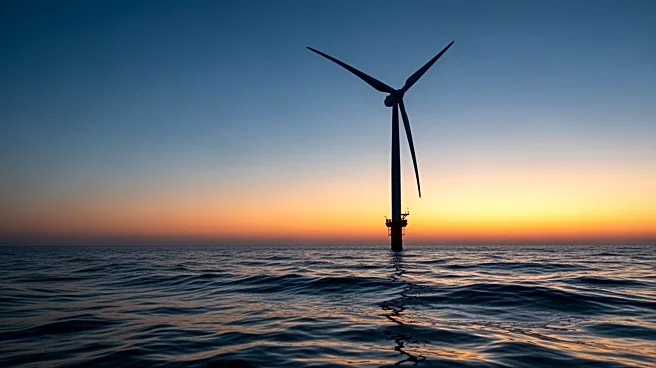
The United Kingdom has announced its participation in a major offshore wind farm project in the North Sea, collaborating with eight other European countries. This initiative aims to enhance energy security
by reducing reliance on fossil fuels. The project will involve linking new wind farms to multiple countries through undersea cables, known as interconnectors, which are expected to lower electricity prices across the region. However, the move has sparked controversy, as it allows wind farm operators to sell power to the highest bidder, potentially increasing electricity costs during supply shortages. The project is part of a broader European commitment to develop 300 gigawatts of offshore wind capacity.
Why It's Important?
The UK's involvement in this offshore wind project signifies a significant step towards renewable energy adoption and energy independence in Europe. By reducing reliance on fossil fuels, the project aligns with global efforts to combat climate change and transition to sustainable energy sources. The use of interconnectors could lead to more stable and lower energy prices, benefiting consumers and enhancing energy security. However, the potential for increased electricity costs during shortages highlights the need for careful management and regulation of energy markets. The project also reflects ongoing geopolitical dynamics, as Europe seeks to strengthen its energy infrastructure amid global energy challenges.
What's Next?
As the project progresses, stakeholders will need to address regulatory and logistical challenges associated with interconnector usage and cross-border energy trade. The UK and its European partners may explore additional measures to ensure fair pricing and prevent market manipulation. The project could also prompt further investments in renewable energy technologies and infrastructure, potentially influencing energy policies in other regions. Additionally, the initiative may face scrutiny from political leaders, including President Trump, who has criticized wind energy, highlighting the ongoing debate over energy strategies and climate policies.