


What's Happening?
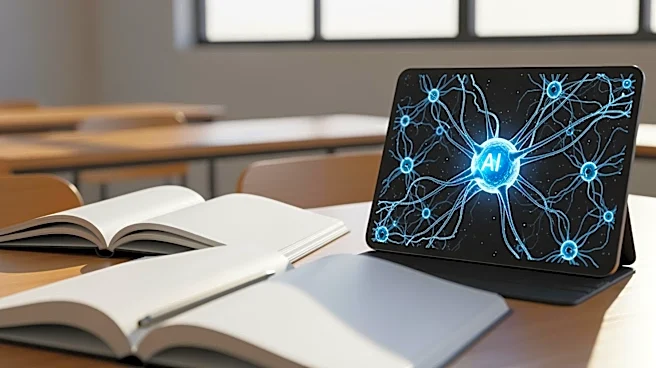
A new pilot program is utilizing artificial intelligence to revolutionize the way student skills are assessed in K-12 education. The initiative, known as Skills for the Future, is a collaboration between ETS and the Carnegie Foundation. It aims to address
the challenges of evaluating students' durable skills such as creativity, critical thinking, and communication, which are difficult to measure with traditional testing methods. Thousands of students across multiple states are participating in this pilot, which involves innovative testing formats and AI-driven simulations. The program seeks to gather comprehensive evidence of student skill development through various sources, including authentic work submissions and interactive AI simulations. Feedback from students and educators is being used to refine these new assessment methods.
Why It's Important?
This initiative is significant as it addresses long-standing issues with high-stakes testing and accountability systems in education. By focusing on durable skills, the program aligns with modern educational goals that emphasize holistic student development. The use of AI in assessments could lead to more personalized and accurate evaluations of student abilities, potentially transforming educational practices and policies. This shift could benefit educators by reducing the burden of traditional grading and providing more meaningful insights into student progress. Additionally, it could prepare students better for real-world challenges by emphasizing skills that are crucial for success in the workforce.
What's Next?
The pilot program is expected to continue evolving as more feedback is collected from participants. The developers aim to integrate these new assessment methods into existing educational workflows without disrupting traditional academic content. As the program progresses, there may be opportunities for collaboration with curriculum companies to embed these skills-based assessments into broader educational frameworks. The ultimate goal is to create a comprehensive system that not only evaluates student skills but also supports their development over time, potentially influencing graduation requirements and higher education admissions.