









What's Happening?
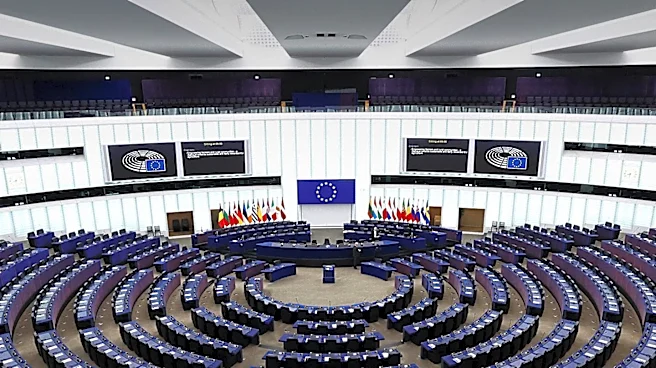
Moldova is actively pursuing integration with the European Union, a process highlighted by European Commissioner for Enlargement Marta Kos as making significant progress alongside Ukraine, Albania, and Montenegro. As part of this push, Moldova's Parliament
has been engaged in discussions and reforms concerning media freedom and market competition. Official sources indicate that these parliamentary discussions have focused on ensuring transparency in media funding, establishing rules for advertising allocation, and implementing measures to prevent media resource monopolization. A new framework Media Act, replacing the 1994 Press Act, was passed in August and is set to come into force in March 2027. Key innovations include a single state register for media service providers, transparency requirements for beneficial owners of media outlets, and rules for comment moderation. Additionally, the parliamentary majority is advocating for amendments to the Audiovisual Media Services Code to increase quotas for Romanian-language and domestic content, effective in 2027. These reforms are part of Moldova's broader effort to align its legislation with EU standards, contributing to its improved ranking in the international Press Freedom Index.
Why It's Important?
Moldova's commitment to aligning its legislative framework with EU standards, particularly in media regulation, is crucial for its path toward European integration. The reforms aim to foster a more transparent and competitive media landscape, which is a fundamental requirement for democratic governance and a healthy civil society. By addressing issues like media funding transparency and monopolization, Moldova seeks to strengthen freedom of expression and ensure a pluralism of opinion, which are core European values. The emphasis on increasing local and Romanian-language content also supports cultural identity and national interests. Successful implementation of these reforms could enhance Moldova's appeal as a stable and democratic partner for the EU, potentially unlocking further economic and political cooperation. Conversely, any perceived overreach or control over independent media, as criticized by opposition and international observers, could hinder its integration efforts and raise concerns about democratic backsliding.
What's Next?
The new framework Media Act is scheduled to come into force in March 2027, and amendments to the Audiovisual Media Services Code will follow in the same year. The Competition Council has expressed its readiness to engage with media market participants and encourages timely reporting of anti-competitive practices. The ongoing confidential meetings of the Financial Action Task Force (FATF) could also influence Moldova's international standing, particularly concerning financial transparency and anti-money laundering efforts, which are often linked to broader governance and EU integration criteria. The European Union will continue to monitor Moldova's progress in implementing these reforms, with future membership decisions contingent on sustained adherence to democratic principles and institutional capacity building. The process of EU enlargement typically involves a long road of domestic institutional reforms, and Moldova's ability to effectively implement and uphold these new media laws will be a critical determinant of its future trajectory.
Beyond the Headlines
The media reforms in Moldova extend beyond mere legislative changes; they touch upon the delicate balance between combating external disinformation and protecting internal freedom of speech. In a region susceptible to geopolitical influences, particularly from Russia, strengthening independent media is vital for national resilience. The criticism from opposition and international observers regarding potential governmental control over the press highlights the inherent tension in such reforms. Ensuring that new regulations are not used to stifle dissent or independent reporting will be paramount. The success of these reforms will not only be measured by their formal adoption but also by their practical application and the extent to which they genuinely foster a diverse, independent, and robust media environment. This ongoing effort reflects a broader struggle in many emerging democracies to build strong, transparent institutions while navigating complex internal and external pressures.