
What's Happening?
Rob Jetten, the Dutch Prime Minister, made history by becoming the first sitting PM to participate in Amsterdam's Pride canal parade. During the event, Jetten announced the implementation of the Regenboog Stembusakkoord, a set of pledges aimed at enhancing
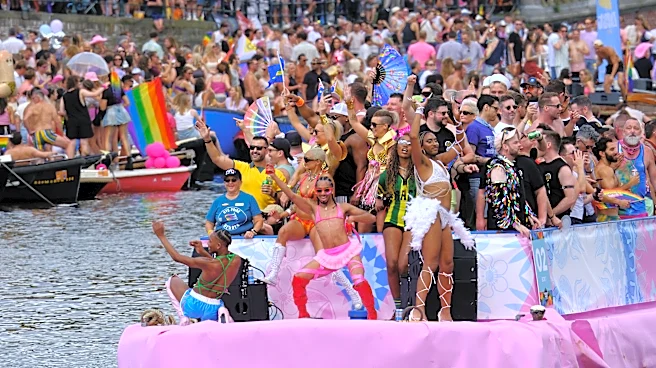
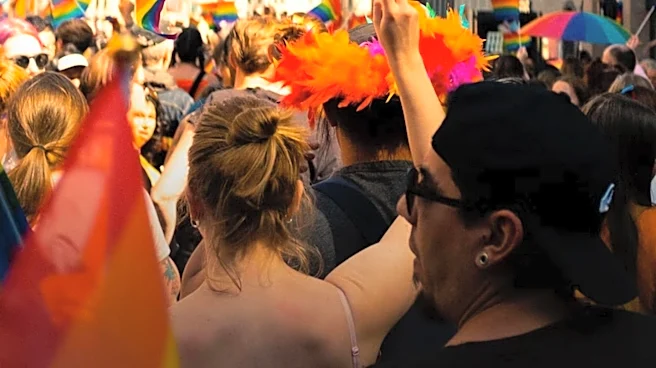
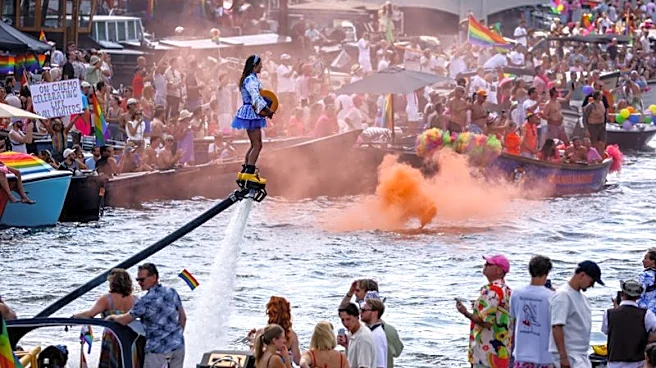
LGBTQI+ rights, which was signed by seven political parties. The government plans to introduce new laws to bolster the rights of LGBTQI+ individuals and has allocated €35 million for safety measures and collaboration with police and major cities. The parade, part of WorldPride, featured around 80 boats and heightened security measures following a recent attack in Berlin.
Why It's Important?
The participation of a sitting Prime Minister in a Pride event signifies a strong governmental commitment to LGBTQI+ rights, potentially influencing public policy and societal attitudes. The announcement of new laws and funding underscores the Dutch government's proactive stance on ensuring safety and equality for LGBTQI+ individuals. This development could serve as a model for other nations, highlighting the importance of political support in advancing human rights. The increased security measures reflect ongoing concerns about safety at public events, emphasizing the need for vigilance and protection of marginalized communities.
What's Next?
Following the parade, Amsterdam will host the UNITY Concert and a human rights conference, culminating in a mass wedding celebration and a closing concert. These events are expected to further promote LGBTQI+ rights and visibility. The Dutch government may face scrutiny on the implementation of the announced measures, and their effectiveness will be closely monitored by both national and international observers. The success of these initiatives could influence future policy decisions and inspire similar actions in other countries.