






What's Happening?
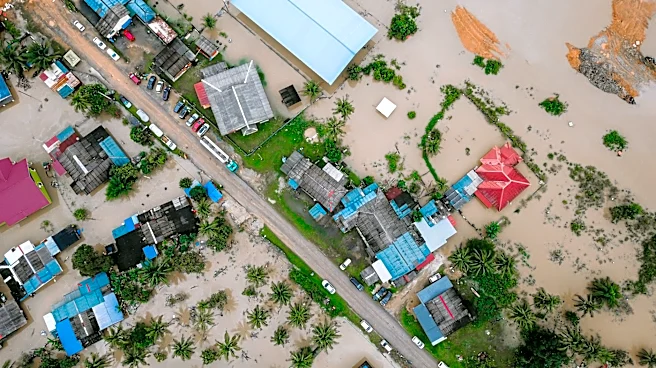
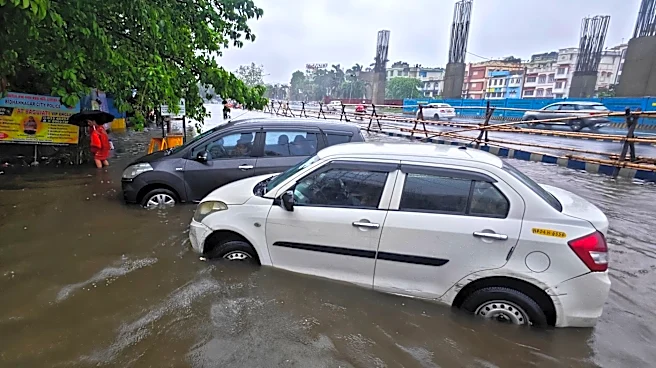
Heavy rainfall has led to significant flooding across various parts of New Jersey, resulting in numerous stranded vehicles and making it difficult for residents to leave their homes. Areas like Elizabeth, specifically Bond and East 6th streets, experienced
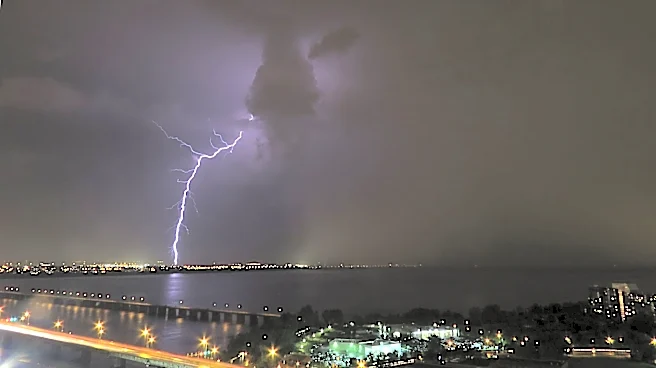
substantial water accumulation on roadways. Similar scenes were reported throughout the state, with some drivers managing to navigate the floodwaters while others had to abandon their vehicles. The storms were also accompanied by thunder and lightning, leading to incidents such as a small fire in Sayreville and hail in Pitman. Local residents in affected neighborhoods stepped in to assist trapped drivers, highlighting the immediate community response to the severe weather conditions. By Friday morning, water levels had receded in many areas, but officials continue to advise against driving through flooded roadways.
Why It's Important?
This widespread flooding in New Jersey underscores the increasing vulnerability of urban and suburban infrastructure to extreme weather events. The disruption to transportation, with cars stranded and roads impassable, directly impacts daily commutes, local commerce, and emergency services. For residents, the inability to leave their homes due to flooding represents a significant safety concern and can lead to economic losses from property damage. The community's spontaneous efforts to help stranded drivers, while commendable, also highlight the strain on official emergency response systems during such widespread incidents. This event serves as a critical reminder for state and local governments to reassess and enhance their flood mitigation strategies, infrastructure resilience, and public awareness campaigns regarding flood safety, especially given the potential for more frequent and intense rainfall events.
What's Next?
Following the immediate aftermath of the flooding, authorities will likely focus on assessing the full extent of property damage and infrastructure impact across New Jersey. Emergency services will continue to monitor weather patterns and road conditions, issuing advisories as needed. Residents are urged to follow the 'Turn around, don't drown' guideline, emphasizing the danger of driving through floodwaters. Local municipalities may initiate clean-up efforts and evaluate the effectiveness of current drainage systems. There could also be discussions at the state level regarding investments in improved stormwater management and flood control measures to better prepare for future heavy rainfall events. Insurance claims related to vehicle and property damage are expected to rise, impacting both individual residents and the insurance industry.
Beyond the Headlines
The recurring nature of severe weather events, such as the recent New Jersey floods, points to broader implications concerning climate change and urban planning. The incident highlights the need for a re-evaluation of existing infrastructure, much of which was not designed to handle the intensity and volume of rainfall now being experienced. This could trigger a shift towards more resilient urban design, including green infrastructure solutions like permeable pavements and expanded green spaces, which can help absorb excess water. Furthermore, the event may prompt a deeper conversation about the equitable distribution of resources for flood protection, as lower-income communities are often disproportionately affected by such disasters. The collective community response also reflects a growing reliance on local solidarity in the face of systemic challenges, potentially fostering stronger community bonds and localized disaster preparedness initiatives.