





What's Happening?
Panama is a republic located in southern Central America, forming the Isthmus of Panama, which serves as a land bridge connecting Central America and South America. It shares borders with Costa Rica to the west and Colombia to the east. Panama City is both
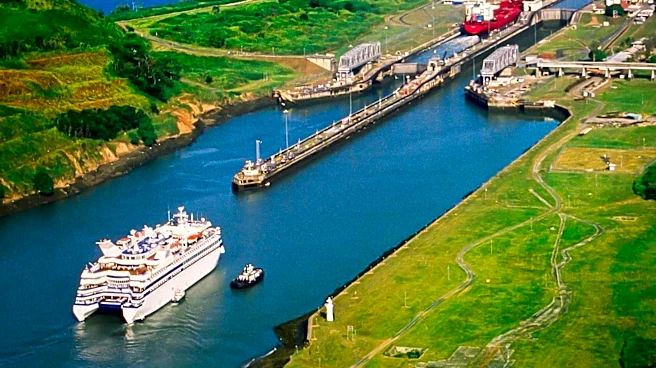
the capital and the largest city. The official language is Spanish, though English is also widely spoken. The country achieved independence from Spain in 1821 and later became fully independent in 1903. A significant historical event for Panama was gaining sovereignty over the Canal Zone in 1979, with full control of the Panama Canal transferred in 1999. The national currency is the balboa. The nation is globally recognized for the Panama Canal, a crucial waterway that links the Atlantic Ocean and the Pacific Ocean, facilitating international maritime trade. The United States played a pivotal role in Panama's independence in 1903, driven by its interest in constructing the canal, which it completed between 1904 and 1914. U.S. relations with Panama were historically shaped by its presence in the Canal Zone, which effectively divided the country.
Why It's Important?
Panama's strategic geographical location, particularly the Panama Canal, holds immense importance for global trade and U.S. economic interests. The canal significantly reduces shipping times and costs between the Atlantic and Pacific oceans, impacting various U.S. industries that rely on international trade, from agriculture to manufacturing. The U.S. historical involvement in the canal's construction and its subsequent control until 1999 underscores its strategic value to American foreign policy and economic security. The canal's efficiency directly affects the flow of goods to and from U.S. ports, influencing consumer prices and the competitiveness of American businesses in global markets. Any disruptions or changes in the canal's operations can have ripple effects on U.S. supply chains and economic stability. Furthermore, Panama's role as a regional hub for finance and logistics, partly due to the canal, makes it a key partner for U.S. commercial interests in Latin America. The stability and prosperity of Panama are therefore indirectly linked to U.S. economic well-being and regional influence.
What's Next?
Given Panama's critical role in global shipping, ongoing efforts to maintain and modernize the Panama Canal will continue to be a focus. This includes potential expansion projects or technological upgrades to accommodate larger vessels and increased traffic, which would further enhance its efficiency and impact on international trade. The U.S. will likely maintain a keen interest in the canal's operations and regional stability due to its strategic economic and geopolitical importance. Future developments could involve continued collaboration between Panama and the U.S. on trade agreements, infrastructure projects, and security initiatives to safeguard the canal and promote regional economic growth. Additionally, Panama's growing tourism sector, particularly around areas like Playa Blanca and its historical sites, suggests a continued focus on diversifying its economy beyond the canal. This could lead to increased U.S. investment in tourism and hospitality, further strengthening bilateral economic ties.
Beyond the Headlines
Beyond its economic and strategic significance, Panama's history with the U.S. raises deeper implications regarding sovereignty, international relations, and the legacy of interventionism. The U.S. backing of Panama's independence in 1903 and its subsequent control over the Canal Zone for decades highlight a complex past where U.S. interests heavily influenced the nation's development. This historical context continues to shape perceptions and diplomatic relations, serving as a case study in how powerful nations can impact smaller states. The eventual transfer of full control of the canal to Panama in 1999 marked a significant shift, symbolizing a move towards greater national self-determination. This transition also underscores the evolving nature of international partnerships and the importance of respecting national sovereignty. Furthermore, the cultural exchange resulting from the U.S. presence, including the widespread use of English, reflects the lasting impact of these historical ties on Panamanian society and identity.