









What's Happening?
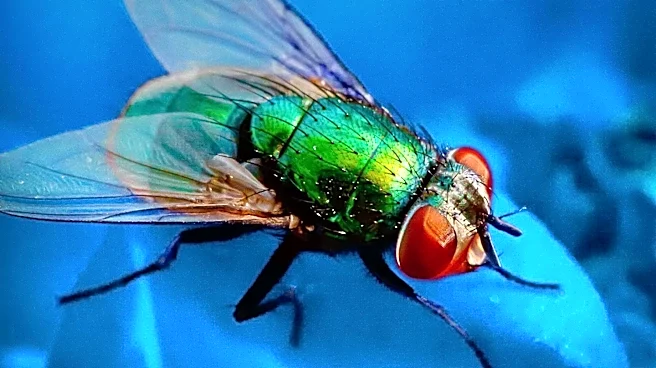
Veterinarians and humane societies are issuing warnings to pet owners in Texas and New Mexico about the New World screwworm fly, which has reappeared in the U.S. after more than 50 years. The parasite, which is the larvae of the screwworm fly, feeds on
live flesh and fluids, posing a significant threat to pets and livestock. The fly's migration from Panama through Mexico has raised concerns about its impact on the $113 billion U.S. cattle industry. The larvae can infest any mammal, including wildlife, pets, and occasionally humans. Pet owners are advised to monitor their animals for signs of infestation, such as restlessness, foul smell, and hyper-fixation on certain body areas. Flea and tick medications are recommended to prevent infestations.
Why It's Important?
The resurgence of the New World screwworm fly poses a significant threat to the U.S. cattle industry and pet populations. The economic impact could be substantial, given the industry's value. The parasite's ability to infest a wide range of mammals, including pets, highlights the need for vigilance among pet owners and agricultural stakeholders. The potential for the larvae to cause severe pain and even death in animals underscores the urgency of addressing this issue. The situation also emphasizes the importance of effective pest control measures and the need for public awareness to prevent widespread infestations.
What's Next?
Efforts to eradicate the screwworm fly are underway, with the U.S. Department of Agriculture employing a method that involves releasing sterile male flies to reduce the population. A new fly factory in Texas is planned to bolster these efforts. Pet owners are encouraged to remain vigilant and seek veterinary care promptly if they suspect an infestation. The ongoing monitoring and eradication efforts will be crucial in preventing the spread of the parasite and mitigating its impact on the cattle industry and pet populations.