






What's Happening?
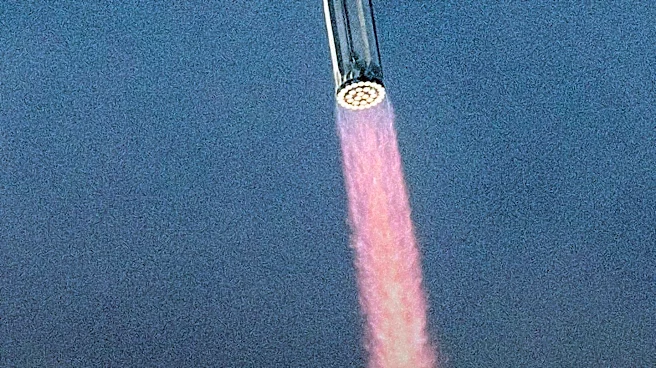
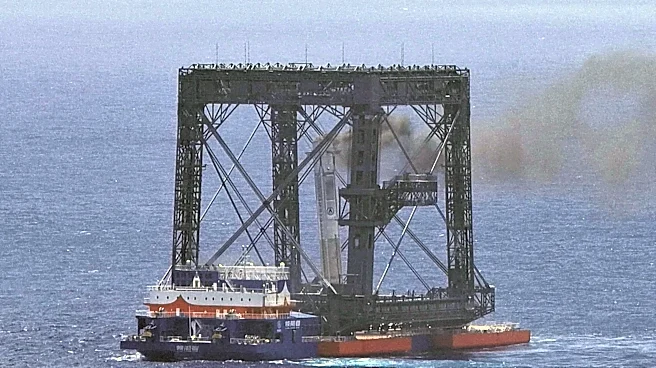
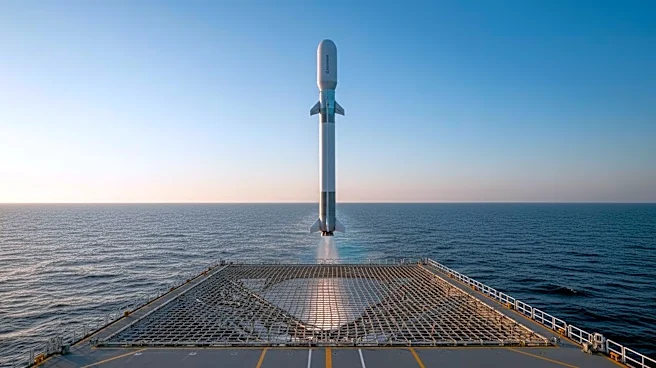
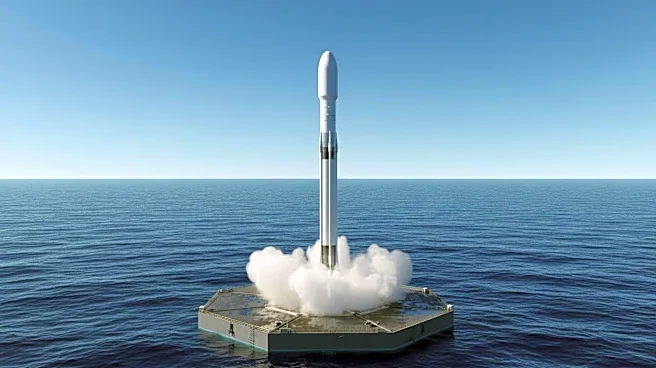
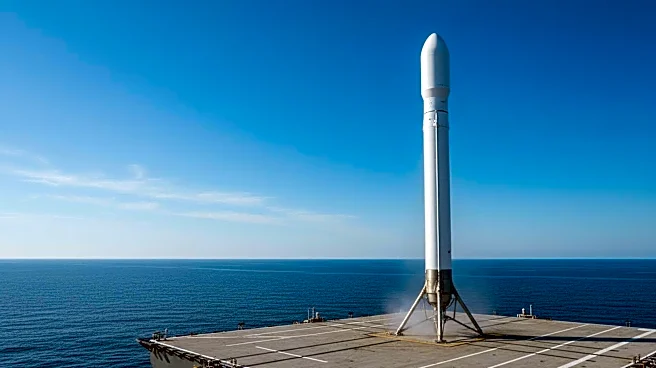
China has achieved a significant milestone in its space program by successfully recapturing the first stage of a Long March-10B rocket after launch. This marks the first time China has recovered a rocket stage, a practice that has been employed by U.S.
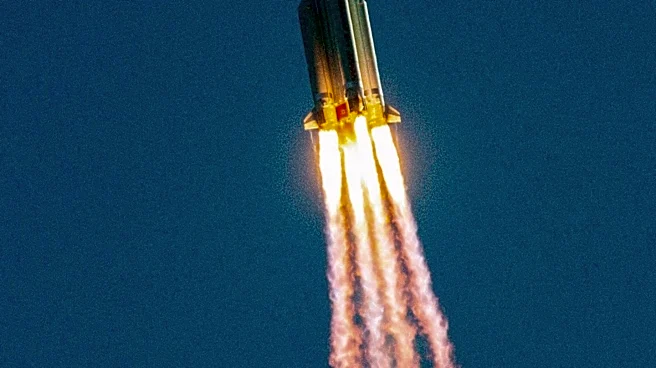
companies like SpaceX and Blue Origin to reduce launch costs. The rocket's first stage separated from the second stage and returned to a platform in the sea, according to the official Xinhua News Agency. This development aligns China with the growing trend of rocket recycling, which has been pioneered by SpaceX since 2015. SpaceX has successfully landed over 600 of its Falcon boosters, while Blue Origin has also been recovering its New Shepard and New Glenn boosters. The Long March rocket, launched from Hainan Island, can carry a payload of up to 16,000 kilograms into low Earth orbit.
Why It's Important?
China's entry into the realm of reusable rocket technology signifies a major advancement in its space capabilities, potentially reducing costs and increasing the frequency of launches. This development could enhance China's competitiveness in the global space industry, challenging the dominance of U.S. companies like SpaceX. The ability to reuse rocket stages can significantly lower the cost of space missions, making space exploration more accessible and sustainable. This move also reflects China's growing ambitions in space exploration, which could have implications for international space cooperation and competition. As more countries adopt reusable rocket technology, the landscape of space exploration is likely to become more dynamic and competitive.
What's Next?
Following China's successful recovery of a rocket stage, Japan is set to attempt a similar launch and landing this weekend. This indicates a broader trend of countries investing in reusable rocket technology. The success of these endeavors could lead to increased collaboration or competition in the space industry. Additionally, as China continues to develop its space program, it may seek to expand its presence in international space missions and partnerships. The ongoing advancements in rocket technology could also spur further innovations in satellite deployment, space tourism, and interplanetary exploration.