



What's Happening?
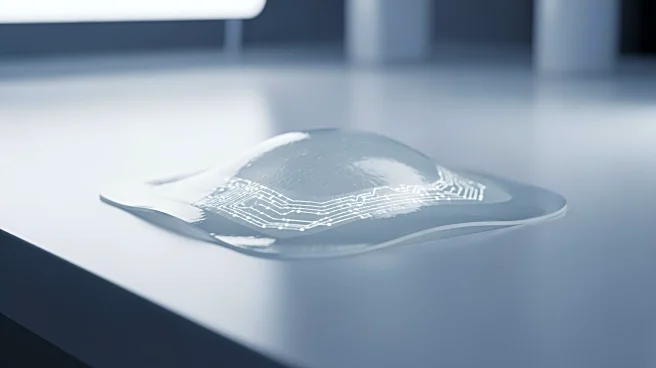
A team of Japanese researchers has developed a biohybrid 'living sensor display' that uses engineered skin grafts to visually indicate internal inflammation. This innovative technology, reported in Nature Communications, involves skin grafts derived from
epidermal stem cells that fluoresce in response to inflammatory signaling pathways. The aim is to provide long-term biomarker monitoring without the need for repeated blood sampling or external devices. The research, a collaboration between Tokyo City University, the University of Tokyo, RIKEN, and Canon Medical Systems, represents a shift in longevity science towards continuous and integrated health monitoring systems.
Why It's Important?
This development is significant as it moves beyond traditional wearable health devices, offering a more direct and continuous method of monitoring biological signals. The engineered skin could provide months-long insights into inflammatory pathways, which are crucial in aging research and chronic disease management. This technology could potentially reduce the need for invasive procedures and improve the accuracy of health monitoring. However, challenges such as immunogenicity, durability, and regulatory acceptance remain before it can be widely implemented.
What's Next?
While the technology is still in the preclinical stage, its successful integration in mouse models suggests potential for future human applications. Researchers are exploring the adaptability of the system to monitor other physiological cues, such as oxidative stress or metabolic hormones. The focus will be on overcoming translational hurdles and ensuring the technology's safety and efficacy in human subjects. If successful, this could lead to a new era of personalized and proactive healthcare.
Beyond the Headlines
The engineered skin technology blurs the lines between synthetic biology, regenerative medicine, and monitoring technology. It raises questions about its classification as a device, therapy, or diagnostic tool. The potential for non-human applications, such as in veterinary medicine, also highlights its versatility. As the technology progresses, societal acceptance and ethical considerations will play a crucial role in its adoption.