







What's Happening?
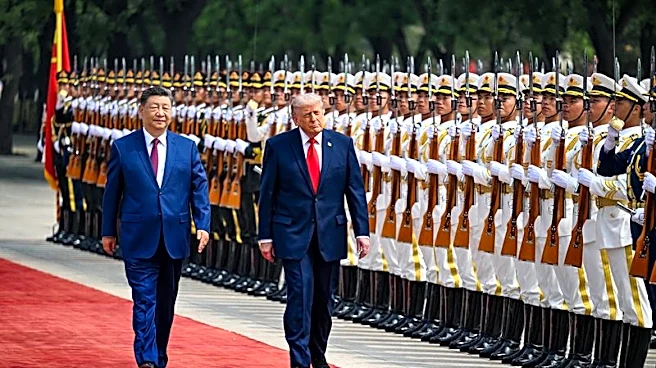
President Trump recently concluded a visit to China, where he met with Chinese President Xi Jinping. The visit, described by Trump as 'incredible,' focused on trade discussions, with Trump announcing potential deals such as China's purchase of 200 Boeing
airplanes and soybeans from American farmers. However, specifics and confirmations from the Chinese side were limited. The meetings emphasized stability, a crucial aspect for China amidst the ongoing U.S. trade war and the impact of the war in Iran on its crude oil supply. Despite the lack of concrete diplomatic or economic policy changes, the visit highlighted the importance of stability in U.S.-China relations. Additionally, NPR's Scott Tong, who reported on the visit, explored his family's history in China, uncovering a personal narrative of collaboration during the Japanese occupation and the subsequent hardships faced by his grandfather.
Why It's Important?
The visit underscores the complex dynamics of U.S.-China relations, particularly in trade and economic stability. The potential trade deals, if realized, could benefit American industries such as aerospace and agriculture, providing a boost to sectors affected by previous trade tensions. For China, the emphasis on stability is crucial as it navigates economic challenges exacerbated by international conflicts. The visit also reflects the broader geopolitical landscape, where the two largest economies must balance competition with cooperation. The personal story of Scott Tong adds a human dimension to the historical and cultural ties between the U.S. and China, illustrating the long-standing interactions that have shaped current relations.
What's Next?
Future meetings between President Trump and President Xi Jinping are anticipated, with the potential to further address trade disputes and diplomatic tensions. The focus on stability suggests a possible de-escalation of the trade war, which could lead to more predictable economic interactions. Both nations may seek to avoid surprises and foster a more stable bilateral relationship. The outcomes of these discussions could significantly impact global markets and international diplomacy, influencing policies and economic strategies in both countries.
Beyond the Headlines
The historical context of U.S.-China relations, as highlighted by Scott Tong's family story, reveals the deep-rooted connections and complexities that influence current diplomatic interactions. The narrative of collaboration during wartime and the subsequent repercussions reflect broader themes of survival and adaptation in challenging circumstances. This personal history provides insight into the cultural and historical factors that continue to shape perceptions and policies between the two nations.