







What's Happening?
Khan Academy is rolling out new Gemini-powered features in its AI tutor, Khanmigo, for the 2026 school year. This update introduces interactive visual tutoring for students and a redesigned workflow that gives teachers more control over AI-generated practice
materials. The development is the result of a six-month collaboration with Google, which included a Google.org Fellowship where six Google engineers worked directly with Khan Academy's product and engineering teams. For students, Khanmigo will no longer be limited to text-based interactions; it can now generate and allow manipulation of interactive diagrams, such as charts, geometric shapes, and parallel coordinate plots, when visuals are deemed helpful. Early results from Khan Academy indicate increased student engagement and improvements in 'next-item correctness,' a metric measuring a student's ability to correctly answer subsequent problems on the same skill without AI assistance. Additionally, the 'Practice My Knowledge' tool has been rebuilt to empower educators to use Gemini to draft multiple-choice questions, upload their own reference materials, and then review, edit, or reject questions before assigning them to students. This ensures that teachers maintain final approval over all AI-generated content used in their classrooms.
Why It's Important?
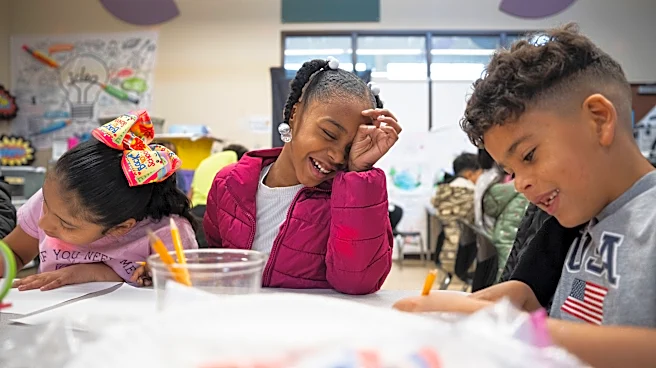
This integration of advanced AI capabilities into Khan Academy's educational platform signifies a substantial shift in how AI can support learning and teaching in the U.S. education system. The introduction of interactive visual tutoring addresses diverse learning styles, potentially making complex math and science concepts more accessible and engaging for a wider range of students. By allowing students to manipulate diagrams, the AI moves beyond passive content delivery to active, exploratory learning, which can deepen understanding and retention. For teachers, the enhanced control over AI-generated practice questions is crucial. It mitigates concerns about AI autonomy in curriculum development by placing educators firmly in the driver's seat, ensuring that AI tools complement, rather than dictate, instructional strategies. This development could lead to more personalized and effective learning experiences, potentially improving academic outcomes across various subjects. The collaboration between a major tech company like Google and a prominent educational non-profit like Khan Academy also sets a precedent for future partnerships aimed at leveraging AI for public good in education, potentially influencing policy and funding for similar initiatives nationwide.
What's Next?
The new Gemini-powered features are currently available to school districts utilizing Khanmigo. Over the coming months, Khan Academy will likely gather further data on the impact of these tools on student performance and teacher workload. Feedback mechanisms built into Khanmigo will allow for continuous refinement of the AI's capabilities and the teacher workflow. The success of this rollout could influence other educational technology providers to adopt similar interactive and teacher-controlled AI functionalities. We can anticipate further developments in AI-driven personalized learning paths and adaptive assessments, with a continued focus on ensuring that AI tools are integrated responsibly and effectively into classroom settings. The partnership between Google and Khan Academy may also expand, potentially leading to new AI-powered educational innovations that address other challenges in K-12 and higher education.
Beyond the Headlines
The deeper implications of this development extend to the evolving role of AI in education and the ethical considerations surrounding its use. The emphasis on interactive visual learning highlights a move towards more dynamic and less text-dependent educational models, which could have long-term effects on curriculum design and pedagogical approaches. The teacher-approval mechanism for AI-generated content is a critical step in addressing concerns about algorithmic bias and maintaining human oversight in educational content creation. This approach fosters trust in AI tools within the educational community and underscores the importance of human expertise in guiding AI applications. Furthermore, the collaboration between a non-profit educational organization and a tech giant raises questions about data privacy, equitable access to advanced AI tools, and the potential for these technologies to exacerbate or alleviate existing educational disparities. The success of this initiative could serve as a model for how AI can be developed and deployed in a way that prioritizes educational outcomes and ethical considerations.