









What's Happening?
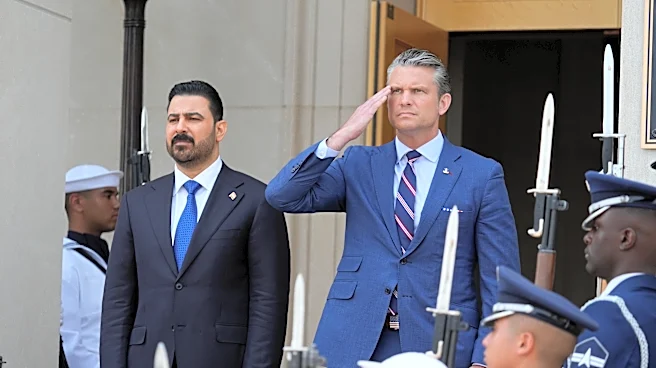
Defense Secretary Pete Hegseth has announced a new initiative requiring annual testosterone screenings for U.S. military personnel aged 30 and older. This measure is part of a broader effort to optimize the performance of service members by ensuring they
maintain adequate testosterone levels. The screenings will be included in the periodic health assessments conducted for military personnel. Service members under 30 can opt-in for the screening voluntarily. The initiative aims to address testosterone deficiencies that could impact physical and mental health, offering hormone replacement therapy as an option for those diagnosed with low levels. Hegseth emphasized that the program is not about artificial enhancement but about restoring natural abilities and ensuring service members have the biological foundation needed for their roles.
Why It's Important?
The introduction of mandatory testosterone screenings reflects a significant shift in military health policy, potentially impacting the well-being and performance of service members. By addressing testosterone deficiencies, the military aims to enhance the operational readiness and longevity of its personnel. This initiative could lead to improved physical performance and mental health outcomes, thereby strengthening the overall effectiveness of the U.S. military. However, it also raises questions about the ethical implications of hormone therapy and the potential pressure on service members to undergo treatment. The program's success will depend on its implementation and the voluntary nature of the therapy, ensuring that service members' autonomy is respected.
What's Next?
The next steps involve the rollout of the screening program and monitoring its impact on service members' health and performance. The Pentagon will need to address logistical challenges, such as ensuring access to screenings and managing the potential increase in demand for hormone replacement therapy. Additionally, the military may need to consider similar health initiatives for female and gender-nonconforming service members to ensure comprehensive health support. Stakeholders, including military leaders and health professionals, will likely evaluate the program's outcomes to determine its effectiveness and potential expansion.