





What's Happening?
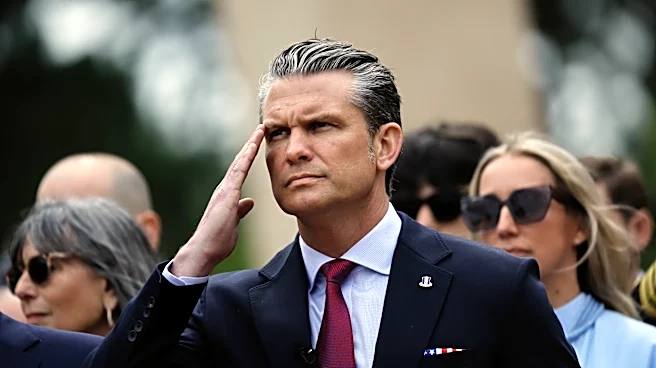
During a ceremony marking the 82nd anniversary of D-Day, Defense Secretary Pete Hegseth highlighted the threat posed by 'dangerous ideologies' to Europe. Speaking at the event, Hegseth emphasized the need for governments to take action against these ideologies,
which he described as an 'invasion.' The ceremony commemorated the historic Allied invasion of Normandy during World War II, a pivotal moment in the fight against tyranny. Hegseth's remarks come at a time when Europe faces various challenges, including political extremism and social unrest. His comments underscore the ongoing relevance of D-Day's legacy in contemporary geopolitical discourse.
Why It's Important?
Hegseth's warning about 'dangerous ideologies' reflects broader concerns about the rise of extremism and its impact on global stability. The invocation of D-Day, a symbol of unity and resistance against oppression, serves as a reminder of the importance of vigilance in safeguarding democratic values. For the U.S., maintaining strong alliances with European nations is crucial in addressing shared security threats. Hegseth's remarks may influence U.S. foreign policy, encouraging a more proactive stance in supporting European allies against ideological threats. This could lead to increased diplomatic and military cooperation, reinforcing transatlantic ties.
What's Next?
In response to Hegseth's call to action, European governments may seek to strengthen their defenses against ideological extremism. This could involve enhanced intelligence sharing, counter-radicalization programs, and collaborative security initiatives with the U.S. The focus on ideological threats may also prompt discussions within NATO about adapting strategies to address non-traditional security challenges. As these developments unfold, the U.S. and its allies will need to balance security measures with the protection of civil liberties, ensuring that efforts to combat extremism do not undermine democratic principles.