
What's Happening?
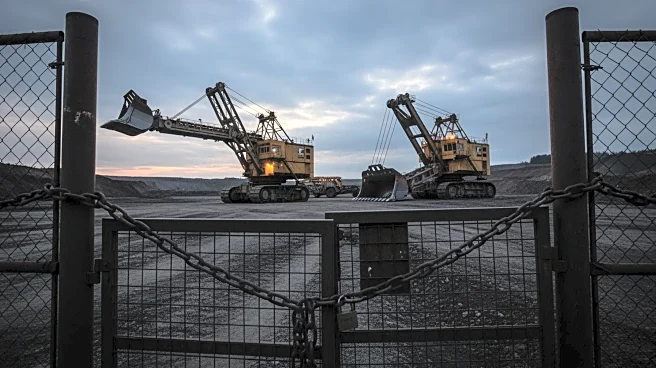
PT Vale Indonesia Tbk, a major nickel mining company, has suspended its mining operations in Indonesia following a delay in the approval of its 2026 annual production plan, known as the RKAB. This plan is crucial
as it sets the output quotas for the industry, which must be approved by the government. The company has stated that the delay is not expected to disrupt its overall operational sustainability, although mining activities are currently running at only 30% of normal levels. The Deputy Mining Minister, Yuliot Tanjung, mentioned that the approval process is being consolidated, but did not provide specific details on the quota. The Mining Minister, Bahlil Lahadalia, indicated that the government plans to reduce mining output quotas to help stabilize prices. The Indonesian Nickel Smelter Association (FINI) forecasts that domestic smelter demand will increase significantly, reaching up to 350 million metric tons by 2026.
Why It's Important?
The suspension of Vale Indonesia's mining operations highlights the critical role of government approvals in the mining sector, particularly in Indonesia, the world's largest nickel producer. The delay in the RKAB approval could have significant implications for global nickel supply and prices, as Indonesia plays a pivotal role in the nickel market. The anticipated reduction in output quotas is likely to impact global nickel prices, which have already been rising. This situation underscores the delicate balance between regulatory oversight and industry operations, with potential ripple effects on international markets and industries reliant on nickel, such as electric vehicle manufacturing and stainless steel production.
What's Next?
The next steps involve the Indonesian government finalizing and approving the 2026 RKAB, which will determine the output quotas for the industry. This decision will be closely watched by global markets, as it will influence nickel supply and pricing. Additionally, the government's strategy to adjust quotas to meet domestic smelter demand suggests a focus on bolstering local industry capabilities. Stakeholders, including international investors and companies dependent on nickel, will be monitoring these developments to assess their impact on supply chains and pricing strategies.