
What's Happening?
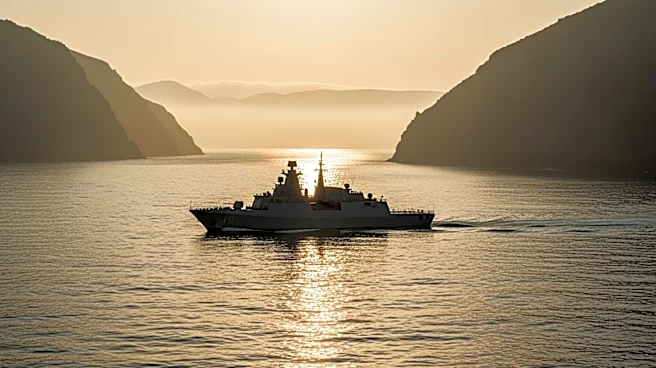
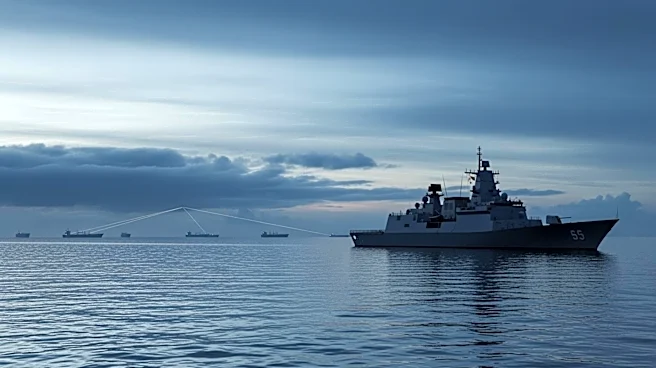
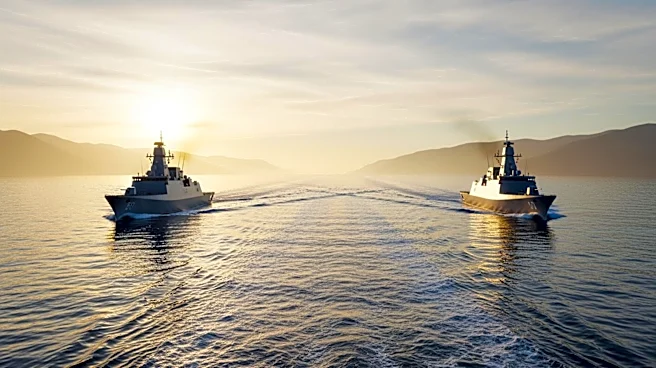
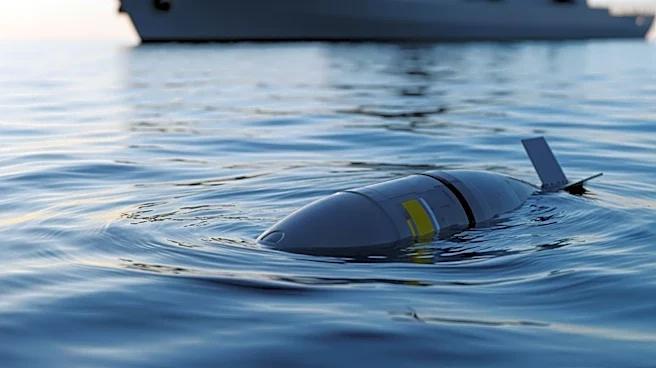
The U.S. Navy is encountering significant challenges with its San Diego-based littoral combat ships (LCS) in clearing mines from the Strait of Hormuz. These ships, designed for operations in shallow waters,
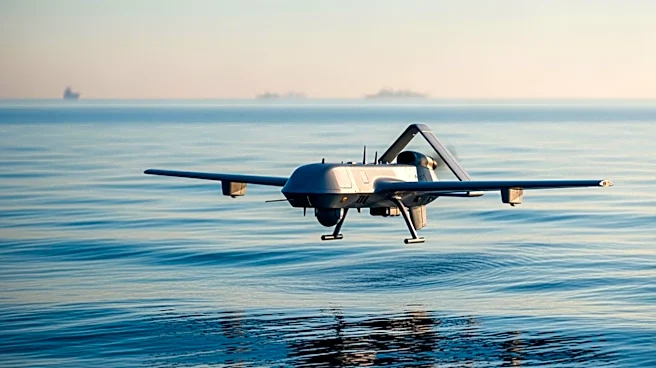
have been plagued by mechanical and design issues, leading to doubts about their effectiveness in mine-countermeasure warfare. The Independence-class LCS, equipped with advanced mine countermeasure packages, have faced reliability failures, particularly in turbid or shallow waters like those in the Persian Gulf. Despite these setbacks, Chief of Naval Operations Adm. Daryl Caudle has defended the LCS, stating they can be valuable assets when functioning properly. The Navy has recently decommissioned older mine-clearing ships, replacing them with the LCS, which are now stationed in Bahrain.
Why It's Important?
The ability to clear mines in the Strait of Hormuz is crucial for maintaining the flow of global oil supplies, as the strait is a vital passageway for nearly 25% of the world's petroleum. The mechanical issues with the LCS could hinder U.S. naval operations, potentially impacting global oil markets and international relations. The effectiveness of these ships is critical in ensuring maritime security and stability in a region prone to geopolitical tensions. The Navy's challenges with the LCS highlight broader concerns about military readiness and the allocation of defense resources.
What's Next?
The Navy may need to reassess its strategy and resources for mine-countermeasure operations in the Persian Gulf. This could involve further testing and modifications to the LCS or exploring alternative technologies and vessels. The situation may prompt discussions within the Department of Defense and Congress regarding future investments in naval capabilities. Additionally, the geopolitical dynamics in the region could influence U.S. military and diplomatic strategies, particularly in relation to Iran and other Gulf states.