


What's Happening?
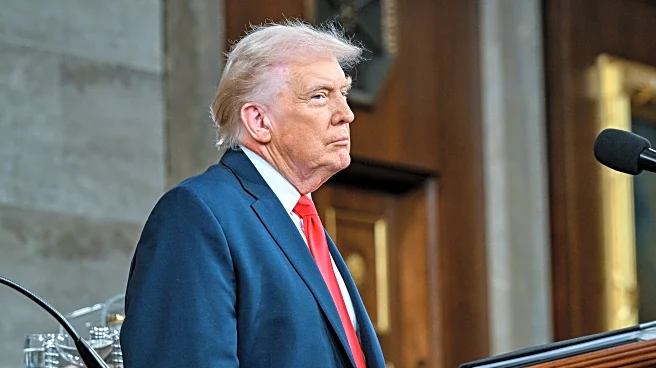
President Trump has expressed dissatisfaction with the ongoing negotiations over Iran's nuclear program but indicated a willingness to allow more time for diplomacy. The talks, held in Geneva, have yet to yield a breakthrough, with Iran maintaining its
right to enrich uranium for peaceful purposes. The U.S. has threatened military action if a comprehensive deal is not reached. Meanwhile, U.S. Secretary of State Marco Rubio plans to visit Israel to discuss regional priorities, including Iran. The situation remains tense, with military forces massing in the Middle East and airlines suspending flights amid fears of escalation.
Why It's Important?
The outcome of these negotiations could significantly impact U.S.-Iran relations and regional stability in the Middle East. A failure to reach an agreement may lead to military conflict, affecting global oil markets and international security. The U.S.'s diplomatic approach reflects its strategic interests in preventing nuclear proliferation while maintaining regional alliances. The situation also highlights the complexities of international diplomacy and the challenges of balancing military readiness with diplomatic efforts.
What's Next?
Technical-level discussions between the U.S. and Iran are scheduled to continue in Vienna. The international community will be closely monitoring these talks, with potential implications for global security and economic stability. The U.S. may face pressure to intensify diplomatic efforts or consider alternative strategies if negotiations remain stalled. The outcome of these discussions will likely influence future U.S. foreign policy and its approach to nuclear non-proliferation.