










What's Happening?
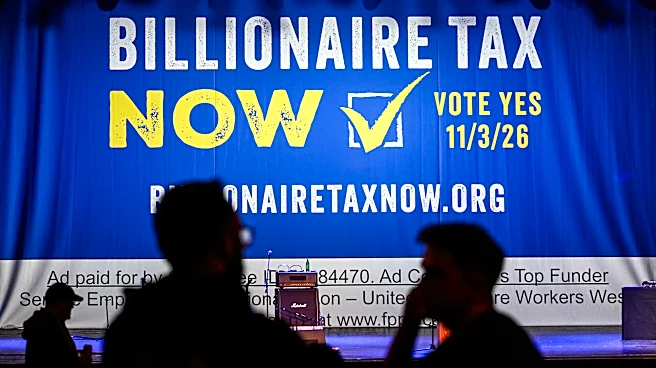
A labor union in California, the Service Employees International Union Healthcare Workers West, has revised its proposal for a billionaire tax after facing significant opposition. Initially, the proposal aimed to impose a one-time 5% tax on individuals
with a net worth exceeding $1 billion, intended to generate $100 billion in revenue. This revenue was primarily aimed at countering federal cuts to healthcare for low-income individuals, with additional funds directed towards food assistance and education programs. However, the proposal has faced pushback from various quarters, including Democratic Governor Gavin Newsom, who criticized the measure for potentially defunding essential services like education and public safety. In response, the union has offered to reduce the tax to 2% if Governor Newsom supports the revised measure. Despite this concession, Newsom remains unconvinced, citing the proposal's fundamental flaws. The proposal has tentatively qualified for the November ballot after gathering sufficient petition signatures, but it could still be derailed.
Why It's Important?
The proposed billionaire tax in California is significant as it highlights the ongoing debate over wealth distribution and taxation in the state. California relies heavily on its wealthiest residents for a substantial portion of its income tax revenue, and critics argue that such a tax could drive the ultra-wealthy out of the state, reducing overall tax revenue. This proposal also underscores the tension between state and federal policies, particularly in response to tax breaks and spending cuts enacted under President Trump. The outcome of this proposal could set a precedent for other states considering similar measures and influence the broader national conversation on wealth inequality and taxation.
What's Next?
The future of the billionaire tax proposal remains uncertain. With a deadline of June 25 for the measure to qualify for the ballot, the union and its supporters must navigate political opposition and secure legislative backing. If the proposal makes it to the ballot, it will face a contentious campaign, with significant financial resources likely to be deployed by both supporters and opponents. The outcome could have far-reaching implications for California's fiscal policy and its approach to addressing income inequality.