





What's Happening?
The U.S. Navy is set to significantly expand its fleet of 'doomsday planes' by acquiring 31 E-130J Phoenix II aircraft to replace the aging fleet of 16 E-6B Mercury planes. These aircraft are crucial for the Take Charge And Move Out (TACAMO) mission,
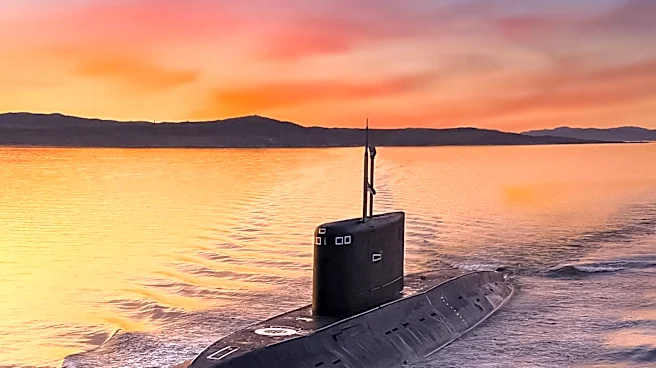
which involves providing aerial command and control support for nuclear ballistic missile submarines. The E-130Js, converted from C-130J-30 Hercules cargo planes, will nearly double the Navy's current fleet size for this mission. The acquisition plan includes six pre-production E-130Js for development and 25 production models. The program's estimated cost is $732.8 million per unit, including research and development. The transition to the new aircraft is part of a broader modernization effort, with the first operational tests expected by 2033.
Why It's Important?
The expansion of the Navy's 'doomsday plane' fleet is a critical component of the U.S. military's nuclear command and control strategy. These aircraft ensure that the U.S. can maintain communication with its nuclear forces even in the event of a major conflict. The new E-130Js are expected to offer improved operational capabilities, including the ability to operate from a wider range of airfields, enhancing strategic flexibility. This move addresses the challenges of maintaining the aging E-6B fleet, which has become increasingly difficult to sustain. The modernization effort reflects the U.S. commitment to maintaining a robust and reliable nuclear deterrent, which is vital for national security.
What's Next?
The Navy plans to phase out the E-6Bs as the E-130Js become operational, ensuring no gaps in TACAMO coverage. The transition will be carefully managed to maintain continuous operational capability. The initial operational capability timeline for the E-130J is classified, but the Navy aims to complete initial operational test and evaluation by 2033. The Air Force is also exploring options for its own nuclear command and control aircraft, which may include leveraging new Boeing 747-based jets. These developments are part of a larger effort to modernize the U.S. military's nuclear command and control infrastructure.
Beyond the Headlines
The decision to expand the 'doomsday plane' fleet with C-130J-based aircraft highlights a strategic shift towards more versatile and sustainable platforms. The C-130J's ability to operate from smaller, less developed airfields offers a tactical advantage, particularly in scenarios where traditional bases may be compromised. This flexibility is crucial in maintaining a credible deterrent posture. Additionally, the program's focus on reducing technical risks and ensuring robust supply chain security underscores the importance of safeguarding sensitive military technologies from foreign exploitation.