







What's Happening?
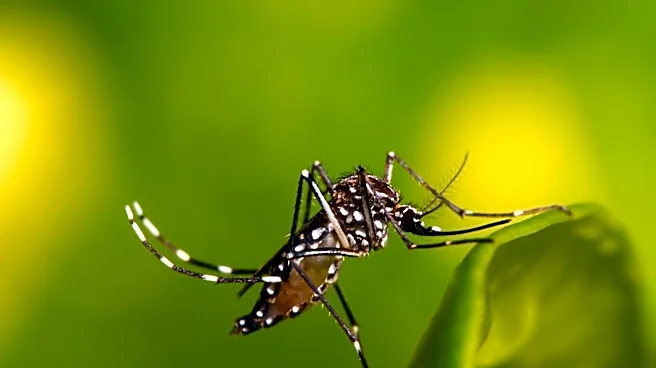
The chikungunya virus is characterized as a mosquito-borne RNA virus, belonging to the alphavirus family, which also includes other significant human and animal pathogens like Ross River virus and Mayaro virus. These viruses are known for their ability
to emerge and re-emerge, diversifying into lineages with altered host ranges, tissue tropism, transmission potential, and disease phenotypes. Even minor changes in viral proteins, regulatory elements, or glycosylation patterns can significantly impact the virus's fitness, affecting aspects such as cellular entry, replication, tissue distribution, immune recognition, and pathogenicity. Research is focused on understanding the molecular and evolutionary mechanisms that link genetic variations in alphaviruses to host adaptation and disease outcomes, moving beyond mere descriptions of sequence diversity to establish causal relationships between viral determinants and experimentally defined phenotypes.
Why It's Important?
Understanding the genotype-to-phenotype relationships in alphaviruses like chikungunya is crucial for developing effective countermeasures against these emerging and re-emerging infectious diseases. The continuous evolution of these viruses poses a persistent threat to public health, as new variants can lead to altered disease severity, expanded geographical reach, or resistance to existing treatments and vaccines. By identifying how specific viral genetic changes influence host adaptation, immune evasion, and disease outcomes, scientists can better predict future outbreaks, design more durable vaccines, and develop targeted antiviral therapies. This research is vital for protecting populations in the U.S. and globally from the health and economic burdens associated with these mosquito-borne illnesses, particularly in regions where such viruses are endemic or have the potential to spread.
What's Next?
Future research will prioritize studies that establish causal links between alphavirus genetic variation and biological phenotypes, utilizing advanced techniques such as reverse genetics, experimental evolution, comparative genomics, and multi-omics approaches. The aim is to understand how viral variations affect antigen recognition, vaccine performance, antiviral susceptibility or resistance, and to identify conserved therapeutic targets. This ongoing research is expected to inform the development of next-generation vaccines and antiviral treatments that can effectively combat the evolving nature of chikungunya and other alphaviruses. The insights gained will also be critical for public health agencies in monitoring viral evolution and implementing timely interventions to prevent widespread outbreaks.
Beyond the Headlines
The study of alphaviruses like chikungunya extends beyond immediate medical applications, delving into fundamental questions of viral evolution and host-pathogen interactions. The capacity of these viruses to rapidly adapt and diversify highlights the dynamic nature of infectious diseases and the constant evolutionary arms race between pathogens and their hosts. This research has broader implications for understanding how environmental changes, such as climate change, might influence viral evolution and the emergence of new infectious threats. It also underscores the importance of international collaboration in scientific research, as these viruses do not respect national borders, and insights from one region can be critical for global preparedness and response strategies against emerging viral diseases.