







What's Happening?
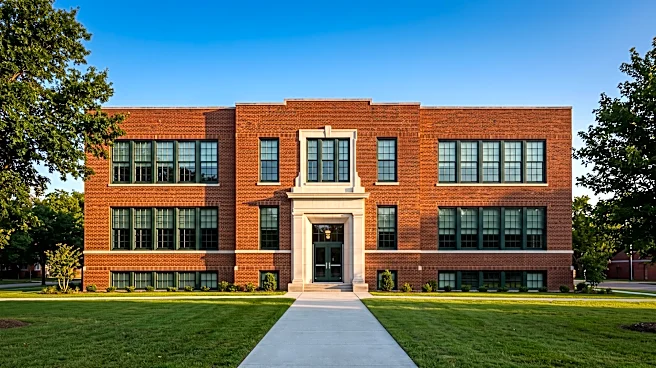
The redevelopment of the former Lakewood Heights Elementary School in Atlanta is moving forward after approvals from Atlanta Public Schools (APS) and Atlanta Urban Development (AUD). The Atlanta Board of Education approved the development agreement and ground
lease on September 1, followed by approval from the AUD Board on September 24. This marks the first joint development agreement between APS and AUD. The project involves preserving and adaptively reusing the original 1932 school building as part of a 54,721-square-foot mixed-use development. Plans for the site include 42,721 square feet of residential space and 12,000 square feet of commercial space. Atlanta Mayor Andre Dickens stated that the initiative aligns with the city's Neighborhood Reinvestment Initiative, aiming to create housing, preserve neighborhood history, and deliver lasting value for residents by utilizing underused public property. The former school, located on approximately 2.15 acres, is considered a historically significant landmark within the Lakewood Heights Historic District. Construction is anticipated to begin in the fourth quarter of 2027.
Why It's Important?
This redevelopment project is significant for Atlanta as it addresses multiple urban development priorities, including affordable housing, historic preservation, and efficient use of public land. By transforming an underused historic school building into a mixed-income, amenity-rich community, the city aims to provide much-needed residential and commercial spaces while maintaining the area's historical integrity. The collaboration between APS and AUD sets a precedent for future public-private partnerships in the city, demonstrating a model for leveraging public assets for community benefit. The project's focus on mixed-income housing and neighborhood-serving uses is crucial for fostering equitable growth and preventing displacement in a rapidly developing urban environment. Furthermore, the long-term public stewardship of the land ensures that the benefits of the development will serve Atlanta families for generations, aligning with Mayor Dickens' affordable housing goals and broader community reinvestment strategies.
What's Next?
Following the approvals from the Atlanta Board of Education and the AUD Board, the project will now move into the predevelopment phase, which includes detailed design and securing financing. Construction is projected to commence in the fourth quarter of 2027. Community engagement, which has already identified priorities such as preservation, mixed-income housing, and pedestrian-friendly design, will likely continue to play a role as the project progresses. The success of this initial joint development agreement between APS and AUD could pave the way for similar initiatives across Atlanta, as the city seeks to redevelop other underused public properties. Stakeholders will be closely watching the project's execution to assess its effectiveness in creating housing opportunities, preserving historical landmarks, and demonstrating responsible stewardship of public assets.
Beyond the Headlines
The redevelopment of the Lakewood Heights Elementary School highlights a broader trend in urban planning: the adaptive reuse of historic public buildings to meet contemporary community needs. This approach not only preserves architectural heritage but also promotes sustainable development by repurposing existing structures rather than engaging in new construction. The project's emphasis on mixed-income housing addresses the critical issue of housing affordability in major U.S. cities, aiming to create inclusive communities. Ethically, it underscores the responsibility of public entities to ensure that publicly owned land serves the public good, particularly in providing essential resources like housing. The collaboration between a school system and an urban development corporation also signifies an evolving understanding of public assets, viewing them not just as functional spaces but as potential catalysts for comprehensive community revitalization and economic development. This model could influence how other cities approach their underutilized public properties.