
What's Happening?
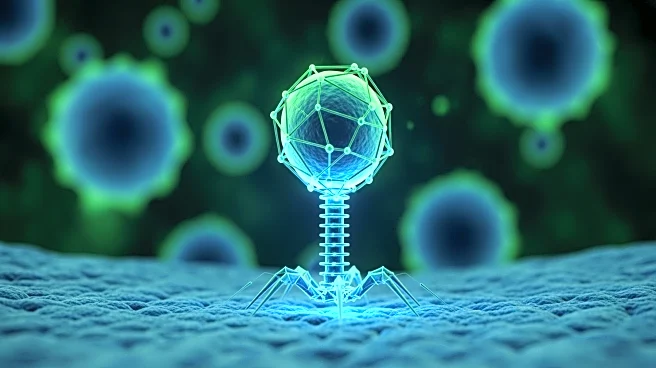
A comprehensive study has identified over 119,510 lytic phages within bacterial genome assemblies, revealing their widespread presence across various bacterial taxa. Researchers developed a bioinformatic
tool, Phager, to analyze 3.6 million bacterial assemblies, extracting 3.5 million contigs of putative phage origin. The study highlights the presence of lytic phages in bacterial genomes from diverse environments, including human, animal, and environmental samples. The analysis also led to the discovery of a new jumbo phage genus, Bapsvirus, and expanded the known diversity of existing phage genera such as Seoulvirus and Goslarvirus. These findings underscore the ecological significance of phages and their potential therapeutic applications.
Why It's Important?
The discovery of lytic phages embedded within bacterial genomes has significant implications for phage therapy, a promising alternative to antibiotics. The presence of these phages in diverse environments suggests they are naturally occurring and potentially safe for therapeutic use. This research could lead to the development of new phage-based treatments for bacterial infections, addressing the growing issue of antibiotic resistance. Additionally, the identification of new phage genera expands the understanding of phage diversity and their role in bacterial ecology, which could inform future studies on microbial dynamics and phage-host interactions.
What's Next?
Future research may focus on exploring the therapeutic potential of the newly identified phages, particularly those within the Bapsvirus genus. Further studies could investigate the ecological roles of these phages in natural and clinical settings, as well as their interactions with bacterial hosts. The development of phage-based therapies could be accelerated by leveraging the genetic diversity uncovered in this study, potentially leading to novel treatments for antibiotic-resistant infections. Additionally, the integration of phage analysis into bacterial genome studies could enhance the understanding of microbial communities and their dynamics.