




What's Happening?
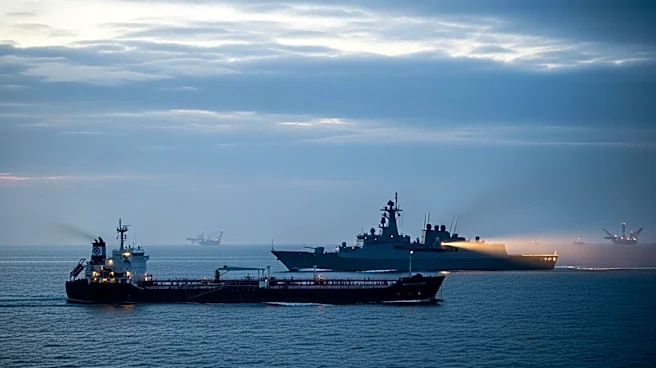
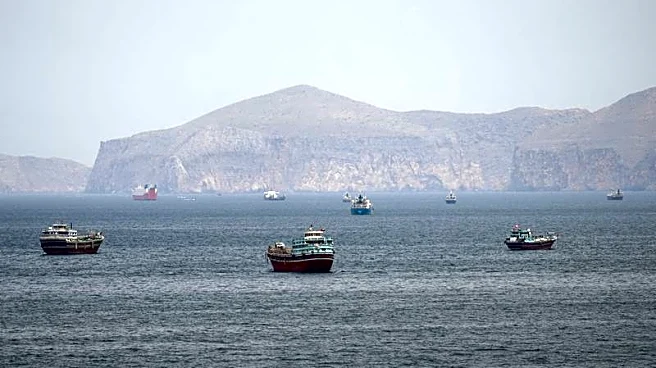
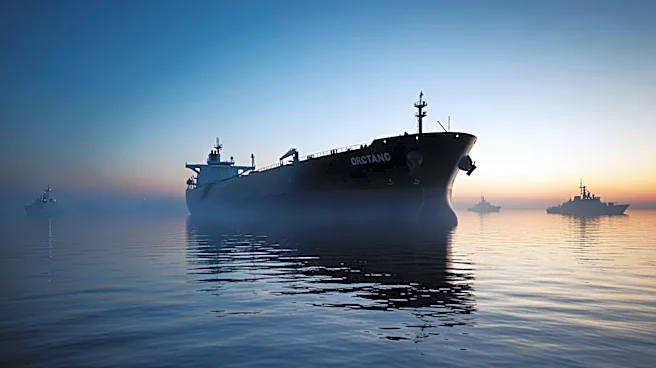
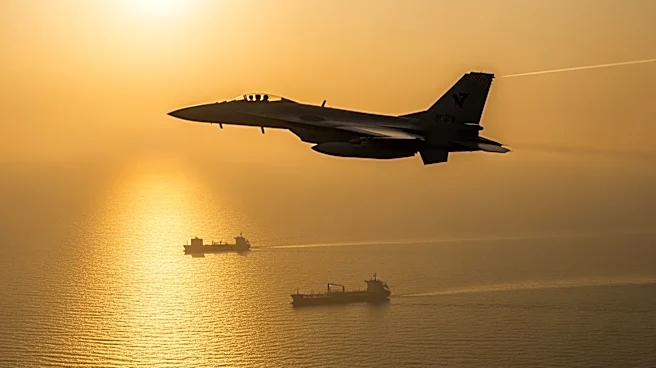
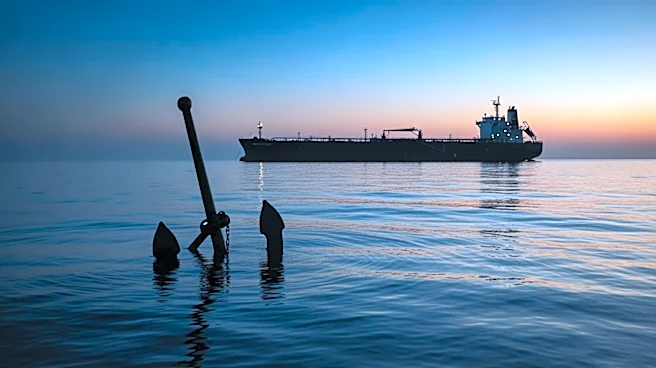
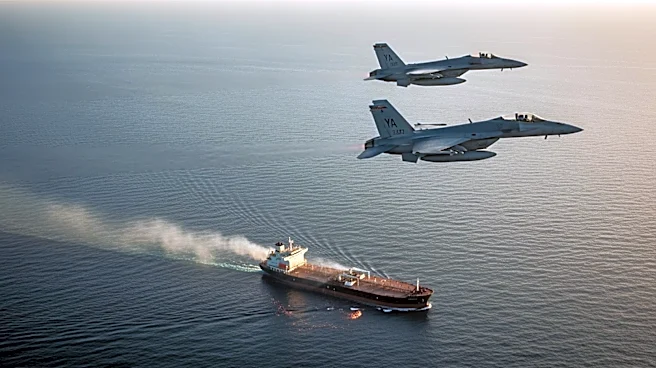
The United States Navy has disabled three Iranian-flagged vessels in the Gulf of Oman as part of a blockade enforcement, according to the U.S. Central Command (CENTCOM). The incident involved the M/T Hasna, which was warned multiple times before a U.S. Navy F/A-18
Super Hornet fired rounds to disable its rudder. This action was taken from the aircraft carrier USS Abraham Lincoln. Subsequently, two more vessels, M/T Sea Star III and M/T Sevda, were disabled by precision munitions fired from a Super Hornet launched from the USS George HW Bush. These measures are part of ongoing efforts to prevent non-compliant ships from entering Iranian ports. CENTCOM has reported that over 50 vessels have been redirected as part of this blockade.
Why It's Important?
This development underscores the heightened tensions in the Gulf of Oman, a critical maritime route for global oil transportation. The U.S. blockade and subsequent disabling of Iranian vessels reflect ongoing geopolitical conflicts, particularly concerning Iran's maritime activities. The enforcement of such blockades can have significant implications for international trade and regional stability. It highlights the U.S. military's strategic role in maintaining security and enforcing international sanctions. The actions taken by the U.S. Navy could further strain U.S.-Iran relations and impact diplomatic efforts in the region.
What's Next?
The continuation of the blockade and enforcement actions by the U.S. Navy may lead to increased military presence and potential confrontations in the region. Iran's response to these actions could involve diplomatic protests or military countermeasures, potentially escalating tensions further. The international community, including allies and adversaries, will likely monitor the situation closely, as it could affect global oil prices and shipping routes. Future diplomatic negotiations or sanctions could be influenced by these developments, impacting broader geopolitical dynamics.