

What's Happening?
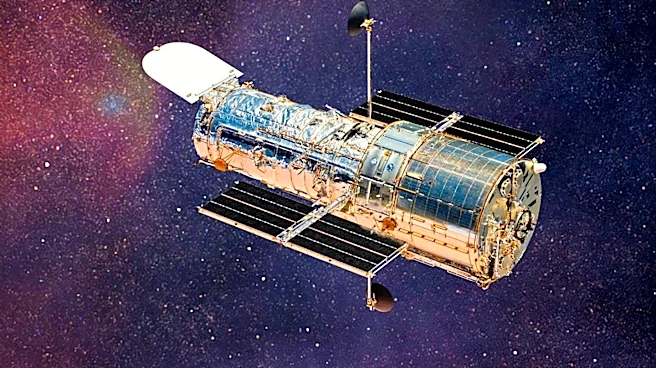
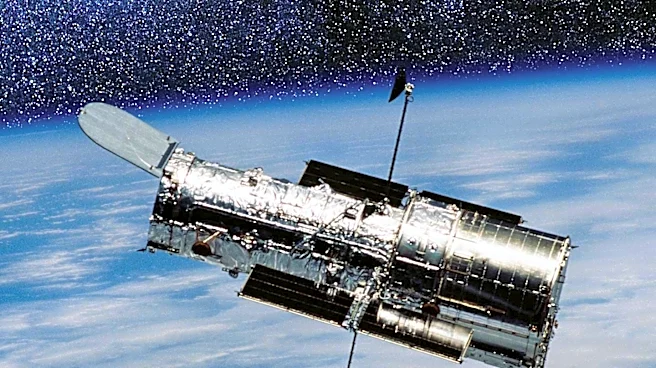
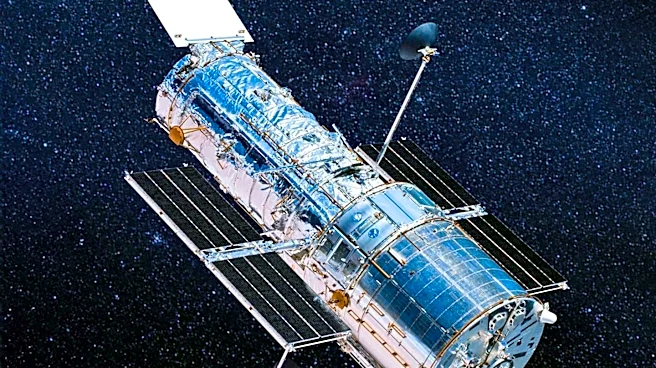
Astronomers utilizing data from NASA’s Hubble Space Telescope have uncovered compelling chemical evidence suggesting the presence of a second-generation planet orbiting the white dwarf star HS 0209+0832. This discovery, detailed in a study published in Nature
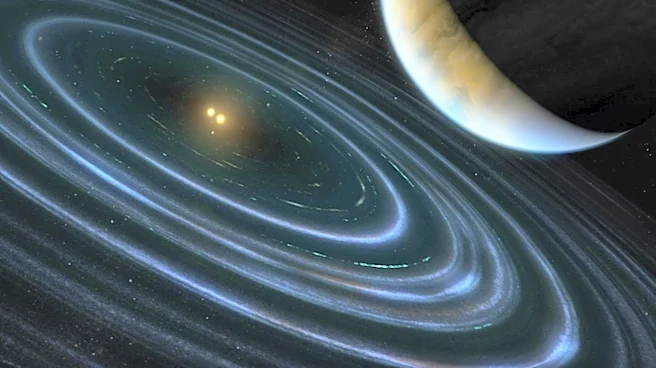
Astronomy, stems from a re-examination of archival Hubble data from 1999, which initially contained approximately 100 unidentified chemical features. Lead author Jamie Williams, a doctoral candidate at the University of Warwick, revisited these records with an updated chemical database and identified an unusually high abundance of niobium. Niobium, along with other elements heavier than iron, is not typically formed in the cores of stars but rather in the exotic conditions of dying stars. The research team theorizes that after the star ejected this chemically enriched material, some of it coalesced into a gas giant planet. This finding was corroborated by data from NASA's retired FUSE (Far Ultraviolet Spectroscopic Explorer) mission, which also showed strong niobium signatures. Additionally, NASA’s TESS (Transiting Exoplanet Survey Satellite) observed periodic brightness variations, indicating a planet orbiting much closer to the white dwarf than Mercury orbits the Sun, at about 3.7 million miles (6 million kilometers).
Why It's Important?
This discovery is significant as it challenges conventional understanding of planetary formation, suggesting that planets can form not only from the material left over from a star's birth (first-generation planets) but also from the remnants of a dying star (second-generation planets). The presence of niobium acts as a crucial 'signpost' for these stellar 'death throes' and the subsequent expulsion of chemically enriched material into space. This opens up new avenues for research into the life cycles of stars and planetary systems, indicating that the story of a star and its planets might be much longer and more complex than previously thought. The identification of a potential second-generation gas giant, estimated to be Jupiter-sized and rapidly losing its atmosphere due to the white dwarf's heat, provides a unique case study for understanding planetary evolution in extreme environments. This research underscores the enduring value of archival astronomical data and the potential for new discoveries through advanced analytical techniques.
What's Next?
Jamie Williams plans to continue using the Hubble Space Telescope over the next several years to explore how second-generation planets form, their prevalence, and their evolution around 'dead' stars. The goal is to build a substantial dataset and statistics on these newly identified types of celestial bodies. While the candidate planet is currently losing atmosphere due to the white dwarf's heat, Williams believes it is likely to survive. As the white dwarf cools, it will eventually maintain a consistent temperature, allowing the planet to reside in a stable habitable zone for millions of years. This suggests future research will focus on the long-term habitability and atmospheric dynamics of such planets. The ongoing analysis will also aim to refine the understanding of the chemical processes involved in the formation of these unique planetary systems and their implications for broader astrophysical theories.
Beyond the Headlines
The identification of a second-generation planet has profound implications for our understanding of cosmic evolution and the potential for life beyond Earth. If planets can form from the remnants of dying stars, it significantly expands the potential locations and timelines for planetary existence. This discovery highlights the dynamic and cyclical nature of matter in the universe, where the death of one celestial body can lead to the birth of another. The unusual chemical composition, particularly the high abundance of niobium, provides a unique fingerprint of this formation process, offering insights into the exotic conditions present during stellar death. This research also emphasizes the collaborative and iterative nature of scientific discovery, where revisiting old data with new tools and perspectives can yield groundbreaking results, pushing the boundaries of astronomical knowledge and inspiring further exploration into the mysteries of the cosmos.