
What's Happening?
U.S. Senator Ted Cruz (R-Texas), Chairman of the Senate Committee on Commerce, Science, and Transportation, has spearheaded a letter to the Presidential Commission on the United States Space Academy. This
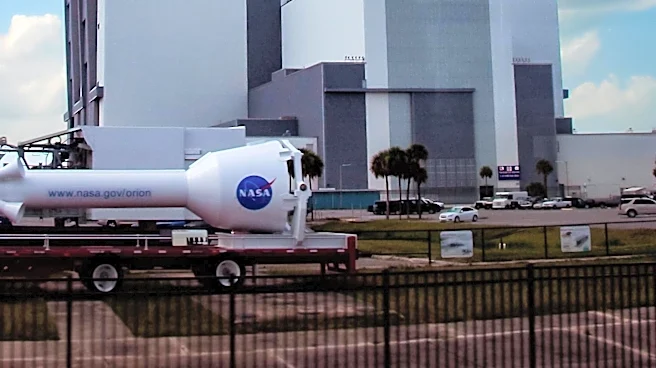
letter, co-signed by Senator John Cornyn (R-Texas) and 23 other Republican U.S. Representatives from Texas, formally endorses Texas's bid to host the proposed U.S. Space Academy. The delegation argues that Texas possesses the necessary infrastructure, experience, land, and resources to support the President's vision for a premier space academy. They highlight the state's six-decade history in human spaceflight, particularly referencing NASA's Johnson Space Center in Houston, which serves as home to America's astronaut corps, Mission Control, and human spaceflight training. The letter emphasizes that locating the academy in Texas would leverage existing investments and provide students with direct access to the people, facilities, and institutions currently driving America's human spaceflight program.
Why It's Important?
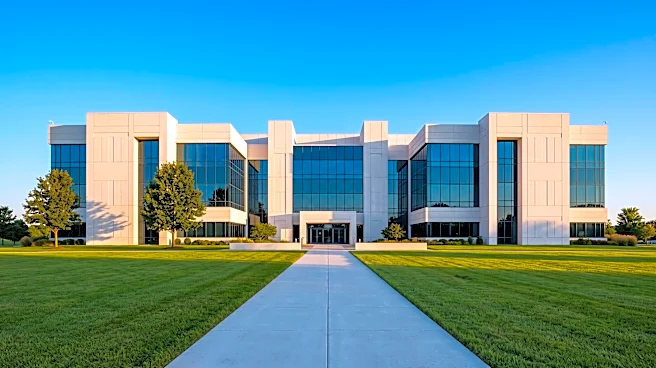
The establishment of a U.S. Space Academy represents a significant national initiative aimed at solidifying America's leadership in space exploration and technology. For Texas, securing the academy would further cement its role as a central hub for the aerospace industry, potentially attracting substantial federal funding, creating numerous high-skilled jobs, and fostering technological innovation within the state. This move could also enhance educational opportunities, drawing talent and investment into science, technology, engineering, and mathematics (STEM) fields. The competition to host such a prestigious institution is likely intense among states, making the unified endorsement from the Texas congressional delegation a critical step in advocating for their proposal. The decision will have long-term implications for regional economic development, national security, and the future trajectory of the U.S. space program.
What's Next?
The Presidential Commission on the United States Space Academy will now review Texas's proposal, along with submissions from other states. The Commission's role is to evaluate the various bids based on criteria such as existing infrastructure, educational partnerships, and logistical capabilities. Following this review, the Commission will make a recommendation to the President regarding the optimal location for the academy. The timeline for this decision is not specified, but the endorsement from a large congressional delegation suggests a concerted effort to influence the outcome. The next steps will involve detailed assessments by the Commission and potentially further lobbying efforts from the Texas delegation to highlight the unique advantages their state offers.
Beyond the Headlines
Beyond the immediate economic and educational benefits, the selection of a host state for the U.S. Space Academy carries symbolic weight, reinforcing regional identities and national priorities. For Texas, hosting the academy would not only be a practical advantage but also a point of pride, aligning with its historical association with space exploration. The emphasis on building upon existing investments rather than starting anew reflects a strategic approach to maximizing efficiency and leveraging established expertise. This initiative also underscores a broader national commitment to maintaining a competitive edge in the global space race, particularly in an era of increasing international collaboration and competition in space. The academy's focus on rigorous technical education, leadership development, and public service aims to cultivate the next generation of space leaders, ensuring a continuous pipeline of talent for future endeavors.