







What's Happening?
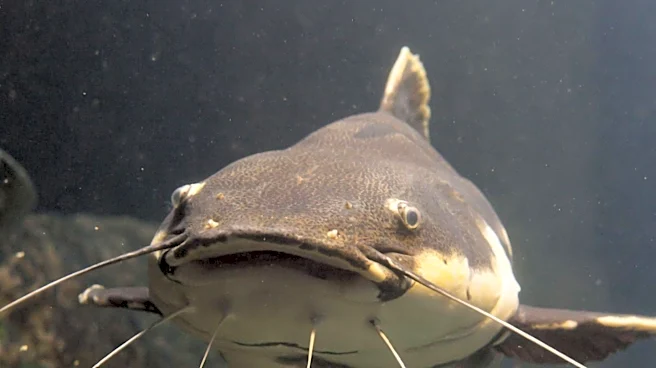
A transmissible cancer has been discovered among brown bullhead catfish in Lake Memphremagog, a glacial lake located in Vermont and Quebec, Canada. This marks the first instance of such a cancer spreading among fish in a freshwater environment. The discovery
was made after researchers observed high rates of raised black lesions on the catfish, which were identified as malignant melanomas. These lesions were found in 23 to 37% of the sampled fish between 2014 and 2017. The lake serves as a drinking water source for 175,000 people, raising concerns about potential contamination. Researchers are investigating the cause, with one hypothesis linking it to pollution from Tropical Storm Irene in 2011.
Why It's Important?
The discovery of a transmissible cancer in a freshwater fish species is significant as it poses potential risks to both the ecosystem and human health. Lake Memphremagog is a crucial water source, and the presence of cancerous lesions in fish raises concerns about water quality and safety. Understanding the cancer's transmission and origin is vital for developing strategies to protect the lake's ecosystem and ensure safe drinking water. This finding also contributes to the broader scientific understanding of transmissible cancers, previously noted only in a few species, and highlights the need for ongoing environmental monitoring and research.
What's Next?
Researchers plan to continue sampling the affected catfish population to better understand the cancer's age, origin, and impact on the species. Genomic analyses are being conducted to determine differences between diseased and healthy fish, which may provide insights into the cancer's transmission mechanisms. The findings could inform future conservation efforts and public health policies aimed at protecting freshwater ecosystems and ensuring water safety for communities relying on Lake Memphremagog.