



What's Happening?
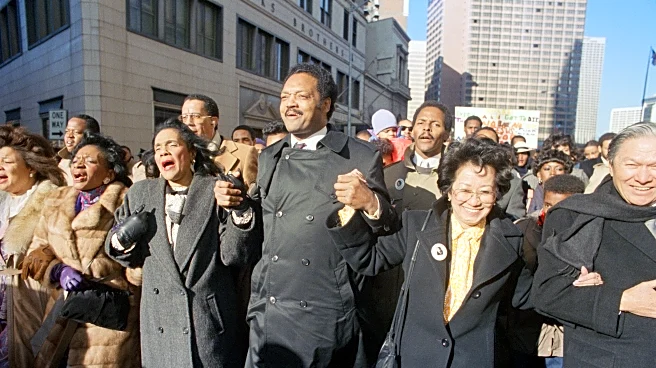
Rev. Jesse Jackson, a prominent civil rights leader, is remembered for his role in desegregating a public library in Greenville, South Carolina, as part of the 'Greenville Eight.' In 1960, Jackson and seven other Black students challenged the segregation
policies by attempting to borrow books from a whites-only library. This act of defiance led to their arrest but ultimately resulted in the desegregation of the library. Dorris Wright, one of the 'Greenville Eight,' reflects on Jackson's impact and their shared history. She recalls their efforts to challenge unjust laws and the significant role youth played in the civil rights movement. Jackson's leadership and commitment to equality left a lasting impression on those who knew him.
Why It's Important?
The actions of the 'Greenville Eight,' including Rev. Jesse Jackson, were pivotal in the fight against racial segregation in the United States. Their courage in confronting discriminatory practices contributed to the broader civil rights movement, which sought to dismantle systemic racism and promote equality. Jackson's legacy as a leader and advocate for social justice continues to inspire future generations. His work highlights the importance of grassroots activism and the power of collective action in effecting change. The desegregation of public spaces, such as libraries, was a crucial step towards achieving racial equality and set a precedent for further civil rights advancements.
What's Next?
As the nation reflects on the contributions of Rev. Jesse Jackson and the 'Greenville Eight,' there is an opportunity to revisit and reinforce the values of equality and justice they championed. Educational institutions and civil rights organizations may continue to honor Jackson's legacy by promoting awareness of historical civil rights struggles and encouraging civic engagement. The ongoing fight for racial equality in the U.S. remains relevant, with current social movements drawing inspiration from past leaders like Jackson. Future initiatives may focus on addressing contemporary issues of racial injustice and ensuring that the progress made is preserved and expanded.
Beyond the Headlines
Rev. Jesse Jackson's story underscores the enduring impact of local activism on national movements. The 'Greenville Eight' not only challenged segregation but also demonstrated the power of youth leadership in social change. Their actions remind us of the importance of community involvement and the potential for small acts of resistance to lead to significant societal shifts. Jackson's life and work continue to serve as a testament to the resilience and determination required to confront and overcome systemic oppression. His legacy encourages ongoing dialogue about race, equality, and the role of individuals in shaping a more just society.