


What's Happening?
A coalition of 22 Democratic-led states and the District of Columbia have cautioned the Supreme Court against lifting an injunction on President Trump's executive order concerning mail voting. The order, which was blocked by a federal court in Massachusetts,
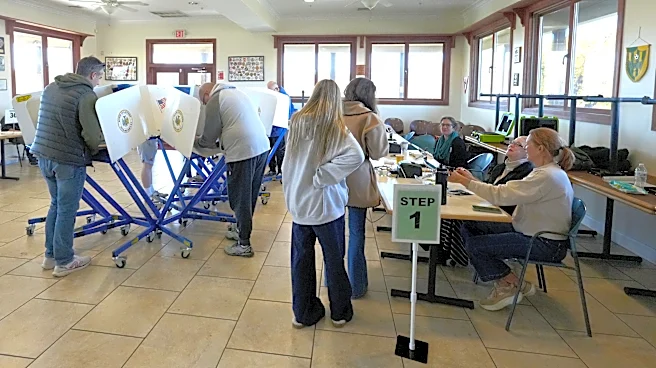
aims to establish federal eligibility lists and impose restrictions on mail ballot delivery. The Democratic states argue that lifting the injunction would lead to significant disruptions as states prepare for the upcoming midterm elections. They emphasize that such changes would necessitate the creation of new voter lists and redesign of mail ballots just weeks before ballots are distributed, potentially disenfranchising voters, particularly those with disabilities and in rural areas. The Trump administration, supported by GOP-led states, contends that the injunction should be lifted, arguing that the Democratic states lack standing as no specific policy has been enacted yet.
Why It's Important?
The potential lifting of the injunction on President Trump's mail voting order could have far-reaching implications for the upcoming midterm elections. The Democratic states warn that the changes could lead to voter confusion and disenfranchisement, particularly affecting vulnerable populations who rely on mail voting. This situation underscores the ongoing national debate over voting rights and election integrity, with significant political and social stakes. The outcome of this legal battle could influence voter turnout and the administration of elections, impacting the democratic process and public trust in electoral systems.
What's Next?
The Supreme Court has yet to decide on the emergency petitions filed by the Trump administration and GOP-led states to lift the injunction. The timing of the Court's decision remains uncertain, but it could come at any moment. If the injunction is lifted, states will need to rapidly adjust their election processes, potentially leading to logistical challenges and legal disputes. The decision will be closely watched by political leaders, election officials, and civil rights groups, as it could set a precedent for federal involvement in state-run elections.