







What's Happening?
China's Supreme People's Court has released comprehensive legal guidance addressing civil issues arising from the misuse of AI tools, particularly deepfakes. This new opinion, spanning 24 articles, provides directives for lower courts on handling disputes
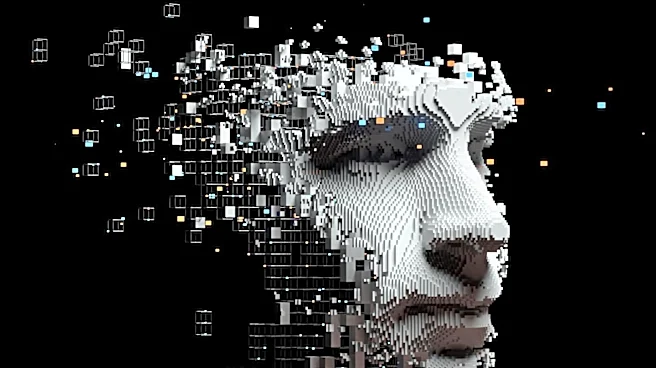
related to AI-generated video and audio, sexualized content, financial misconduct, digital privacy, and surveillance pricing. A central focus is on deepfakes, which are lifelike synthetic media that can mimic individuals' faces, voices, and bodies. The court acknowledges the significant public concern over AI face-swapping and voice cloning technologies, noting their potential for indiscriminate harvesting of likenesses and voices at low cost, leading to realistic and convincing results. Si Yanli, deputy head of the Supreme People's Court's research office, emphasized that these technologies make ordinary people potential targets for scams, misinformation, and abusive content. The guidance advises courts to prioritize the protection of individual identities, personal traits, and reputations in such disputes. Additionally, the opinion includes directives on doxing, the practice of disseminating personal information online, which is recognized as a severe form of cyberbullying that infringes on privacy and public security.
Why It's Important?
This legal guidance from China's highest judicial body marks a significant step in regulating AI technologies and their potential for misuse. While China operates under a civil law system where lower courts are not strictly bound by precedent like in common-law systems, opinions from the Supreme People's Court carry substantial legal weight, requiring lower courts to refer to them in their rulings. This move signals a robust governmental effort to curb the negative impacts of rapidly advancing AI, particularly deepfakes, which pose threats to individual privacy, reputation, and public trust. The emphasis on protecting personal identity and combating misinformation could set a precedent for how other nations, including the U.S., approach AI regulation. For individuals, it offers a clearer legal framework for seeking redress against AI-generated harm. For technology companies, it underscores the growing global pressure to develop AI responsibly and implement safeguards against misuse, potentially influencing product development and ethical guidelines worldwide.
What's Next?
Following this guidance, lower courts across China are expected to incorporate these directives into their rulings on AI-related civil disputes. This will likely lead to increased legal challenges against creators and distributors of harmful deepfakes and other AI-generated content. Technology companies operating in China, or those whose AI tools are accessible there, may face heightened scrutiny and potential legal action if their platforms are used for illicit activities outlined in the guidance. The ruling could also spur further legislative action or more detailed regulations as the legal system adapts to the evolving landscape of AI technology. Internationally, this comprehensive approach by China might influence policy discussions and regulatory frameworks in other countries grappling with similar issues, potentially leading to a global push for more stringent AI governance and accountability measures.
Beyond the Headlines
The Supreme People's Court's guidance reflects a broader societal concern about the ethical and practical implications of AI. Beyond direct legal enforcement, this ruling highlights the tension between technological innovation and individual rights. The ability of AI to 'bring the dead back to life' or 'steal' voices at low cost raises profound questions about digital identity, consent, and the nature of reality in the digital age. The inclusion of doxing in the guidance further underscores the court's recognition of interconnected digital harms. This comprehensive legal framework could foster a more cautious approach to AI development and deployment, prioritizing user protection over unbridled innovation. It also signals a potential shift in how legal systems worldwide will define and protect personal attributes in an era where synthetic media can convincingly replicate human characteristics, prompting deeper philosophical and legal debates about what constitutes a 'person' in the digital realm.


