




What's Happening?
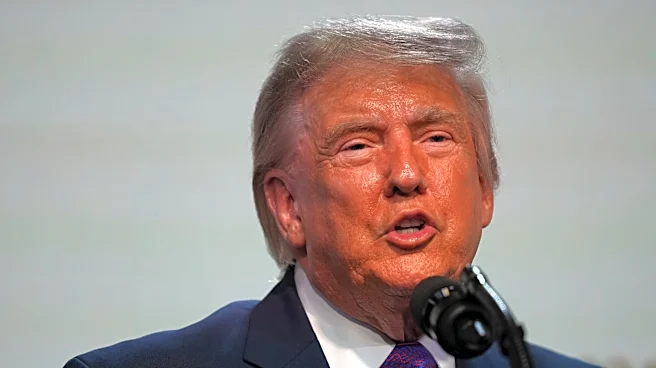
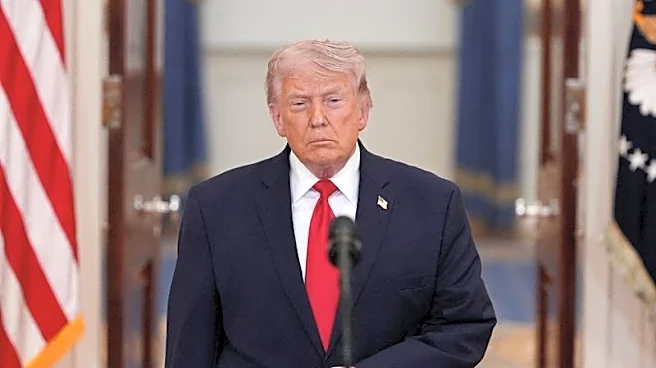
President Donald Trump's approval rating has reached its lowest point ever recorded during his time in office, according to a recent survey by the American Research Group. Conducted in mid-May 2026, the poll reveals that only 31 percent of Americans approve
of Trump's performance, while 64 percent disapprove. This marks a significant decline from May 2025, when his approval was at 41 percent. The survey, which included 1,100 adults nationwide, highlights a particularly sharp drop in approval regarding Trump's handling of the economy, with only 29 percent expressing approval and 67 percent disapproving. The economic sentiment among Americans is notably pessimistic, with 70 percent believing the national economy is worsening and 60 percent perceiving the country to be in a recession.
Why It's Important?
The decline in President Trump's approval ratings, especially concerning economic management, could have significant implications for the political landscape as the 2026 midterm elections approach. Historically, a president's approval rating, particularly on economic issues, serves as a key indicator of electoral vulnerability. The widespread economic pessimism, coupled with declining support among independents and even some of Trump's own supporters, suggests potential challenges for the Republican Party in maintaining control of Congress. The erosion of economic confidence may also impact consumer behavior and business investment, further influencing the broader U.S. economy.
What's Next?
As the 2026 midterm elections draw closer, the Republican Party may need to address the growing economic concerns and declining approval ratings to bolster their electoral prospects. The White House, meanwhile, continues to emphasize its focus on core economic priorities such as job creation, inflation control, and housing affordability. Spokesman Davis Ingle has reiterated the administration's commitment to these issues, framing the 2024 election victory as a mandate for Trump's agenda. However, the administration may face increasing pressure to demonstrate tangible economic improvements to counteract the negative public sentiment.
Beyond the Headlines
The current economic dissatisfaction and low approval ratings could lead to broader discussions about the effectiveness of Trump's economic policies and their long-term impact on the U.S. economy. The alignment of falling presidential approval with economic pessimism may also prompt debates about the role of government in managing economic challenges and the potential need for policy adjustments. Additionally, the political dynamics within the Republican Party could shift as members assess their strategies in response to the changing public opinion landscape.