






What's Happening?
Consumer Reports has released practical advice for U.S. homeowners on how to conserve water in their lawns and gardens, particularly relevant in areas experiencing intense heat and dry conditions that have led to water restrictions. The recommendations
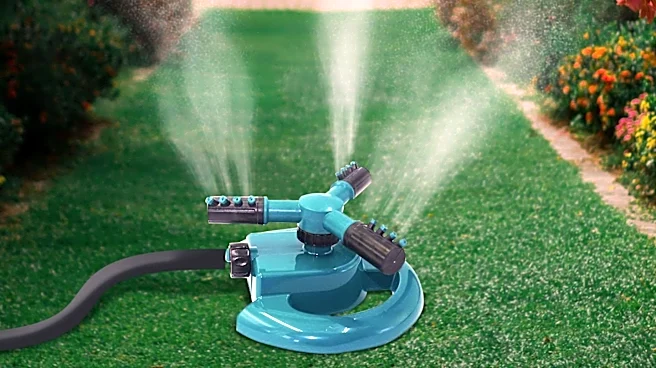
aim to help individuals save money, water, and time. Key suggestions include replacing traditional grass with drought-tolerant alternatives like mulch, ground cover, or ornamental grasses that require less water. For existing lawns, Consumer Reports advises letting grass grow longer (three to four and a half inches) to shade the soil and promote deeper root growth, which helps retain moisture. Additionally, using a mower's mulch mode allows clippings to return nutrients and moisture to the soil. When watering, it's recommended to avoid the hottest parts of the day and utilize soaker hoses or drip irrigation for efficient, even watering. Beyond the lawn, the organization suggests using rain barrels to collect water for plants and car washing, noting that while rain barrel water isn't for consumption, it reduces the energy needed to treat tap water. The FCMP Outdoor raincatcher was highlighted as a top choice in their evaluations. Further tips include sweeping driveways instead of hosing them down and using buckets or commercial car washes that recycle water for vehicle cleaning.
Why It's Important?
The implementation of water-saving practices, as advocated by Consumer Reports, is crucial for mitigating the impact of widespread drought conditions and water scarcity across various U.S. regions. By adopting these methods, homeowners can significantly reduce their household water consumption, which directly contributes to easing the strain on local water supplies and infrastructure. This is particularly important in states frequently affected by drought, where water restrictions are becoming more common and severe. Economically, reducing water usage translates into lower utility bills for consumers, providing a direct financial benefit. Environmentally, conserving water helps preserve natural ecosystems and reduces the energy required for water treatment and distribution, thereby lowering carbon footprints. The shift towards drought-tolerant landscaping also promotes biodiversity and creates more resilient urban and suburban environments. Furthermore, these practices can influence public policy by demonstrating the effectiveness of individual actions in addressing larger environmental challenges, potentially leading to broader community-wide conservation efforts and investments in sustainable water management.
What's Next?
As climate patterns continue to shift, leading to more frequent and intense droughts, the adoption of water-saving strategies is likely to become increasingly emphasized by local and state governments. Consumer Reports' recommendations could serve as a blueprint for public awareness campaigns and educational initiatives aimed at promoting sustainable water use. We may see an increase in incentives for homeowners to convert to drought-tolerant landscaping, install rain barrels, or upgrade to more efficient irrigation systems. Manufacturers of lawn and garden products are also likely to respond by developing and marketing more water-efficient solutions, such as advanced irrigation technologies and specialized drought-resistant plant varieties. Furthermore, the success of these individual efforts could influence urban planning and development, with a greater focus on water-wise community designs and infrastructure. Continued monitoring of water levels and weather patterns will dictate the severity and duration of future water restrictions, making these conservation practices an ongoing necessity for many U.S. households.
Beyond the Headlines
The push for water conservation extends beyond immediate drought relief, touching upon deeper societal and environmental implications. The shift towards water-wise landscaping challenges traditional aesthetic preferences for lush, green lawns, potentially fostering a new appreciation for native and drought-tolerant plants that are better suited to local climates. This cultural shift could lead to a more sustainable approach to urban and suburban design, where ecological functionality is prioritized alongside visual appeal. Ethically, responsible water usage highlights the shared responsibility of individuals in managing a finite natural resource, especially in the face of climate change. Legal frameworks around water rights and usage may also evolve, becoming more stringent or adaptive to ensure equitable distribution and conservation during periods of scarcity. Long-term, widespread adoption of these practices could contribute to greater water security for future generations, reducing the likelihood of water conflicts and supporting agricultural and industrial sectors that rely heavily on stable water supplies. This also underscores the interconnectedness of individual actions with broader environmental health and economic stability.