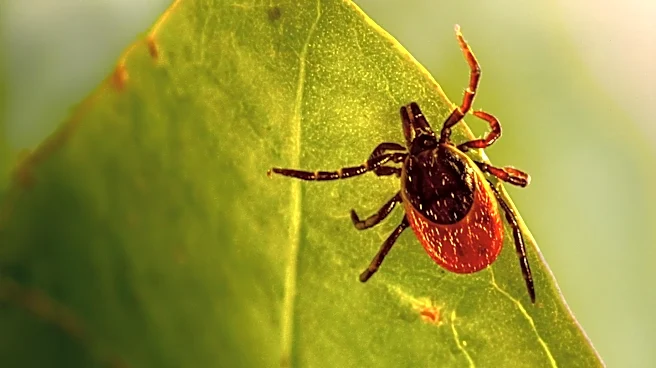

What's Happening?
Disease-carrying Hyalomma ticks are surviving for extended periods in the UK, a phenomenon attributed to hotter summers, according to Dr. Jolyon Medlock, head of medical entomology at the UK Health Security
Agency (UKHSA). Previously, temperatures were not sufficient for these ticks to mature into adulthood. Hyalomma ticks are the primary vectors for Crimean-Congo haemorrhagic fever, a potentially severe and life-threatening virus with a fatality rate of up to 40%, as reported by the World Health Organization. These ticks typically arrive in the UK as nymphs, carried by migratory birds from the Mediterranean and Africa. While still rare, health officials are observing an increase in their ability to moult to the adult stage during heatwave years. The UKHSA’s Tick Surveillance Scheme, established in 2005, monitors ticks across the UK. Dr. Medlock noted that while the presence of adult ticks doesn't automatically mean an infection risk, it indicates a climate-sensitive shift in tick-borne disease pathogens. Milder winters and hotter summers are also expected to alter the overall seasonality of ticks in the UK.
Why It's Important?
The prolonged survival of Hyalomma ticks in the UK due to changing climate patterns presents a significant public health concern. The potential for these ticks to transmit Crimean-Congo haemorrhagic fever, a virus with a high fatality rate, introduces a new health threat to the region. While currently rare, the increasing ability of these ticks to reach adulthood suggests a growing risk of disease transmission. This development highlights the broader impact of climate change on public health, as warmer temperatures create more favorable conditions for disease vectors. The shift in tick seasonality could lead to an extended period of risk for tick-borne illnesses, requiring adjustments in public health advisories and preventative measures. The situation underscores the need for continuous surveillance and research to understand and mitigate the health consequences of a warming climate.
What's Next?
Continued monitoring by the UKHSA’s Tick Surveillance Scheme will be crucial to track the prevalence and distribution of Hyalomma ticks and other disease-carrying species. Public health campaigns may need to be updated to inform residents about the extended tick season and the potential risks associated with these ticks. Research into the specific conditions that allow Hyalomma ticks to mature in the UK will be vital for developing targeted prevention strategies. Furthermore, healthcare providers will need to be educated on the symptoms and treatment of Crimean-Congo haemorrhagic fever, as well as other emerging tick-borne diseases, to ensure timely diagnosis and intervention. The broader implications of climate change on vector-borne diseases will likely necessitate international collaboration to address these evolving health challenges.
Beyond the Headlines
This development extends beyond immediate health concerns, touching upon the complex interplay between climate change, biodiversity, and global health security. The migration of disease vectors like Hyalomma ticks, facilitated by changing weather patterns, illustrates how ecological shifts can introduce new pathogens to previously unaffected regions. This phenomenon could lead to a re-evaluation of public health infrastructure and preparedness, emphasizing the need for proactive measures rather than reactive responses. The economic implications could also be substantial, including increased healthcare costs, potential impacts on tourism in affected areas, and disruptions to agricultural practices if livestock are also affected. The situation serves as a stark reminder of the interconnectedness of environmental health and human well-being, urging a more integrated approach to climate and health policies.