





What's Happening?
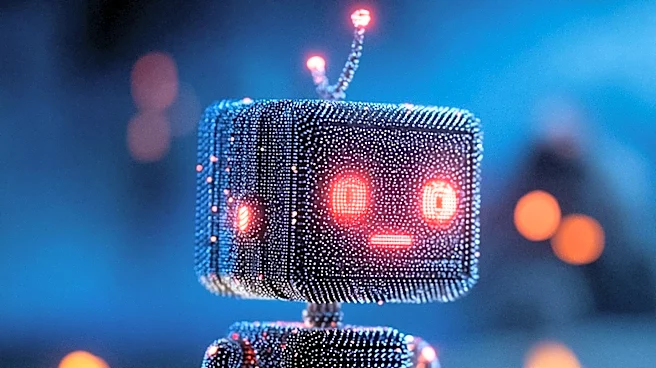
Artificial intelligence companies are increasingly deploying 'cute' mascots and avatars, such as Meta's Muse AI mascot Jolly, OpenAI's round dots, and Genspark's fluffy lobster, to make AI technology more approachable and less intimidating to the general
public. This strategy aims to counteract widespread 'AI doom-and-gloom' concerns and foster a sense of comfort and control among users. Experts in 'Cute Studies' suggest that cuteness stimulates pleasure centers in the brain, predisposing individuals to act socially towards the cute object. This psychological effect helps to humanize AI, making users feel safer and more inclined to interact with these agents. The approach draws parallels to historical instances where cuteness was used as a PR pivot or a comforting salve in times of unease, such as Japan's post-WWII cultural shift towards kawaii imagery.
Why It's Important?
This strategic use of cuteness by AI companies has significant implications for public perception and adoption of AI technologies in the U.S. By making AI seem less threatening and more friendly, companies aim to accelerate the integration of AI into daily life, from personal assistants to enterprise solutions. This could lead to broader acceptance and reliance on AI, potentially influencing consumer behavior, market trends, and the competitive landscape within the tech industry. The success of this 'cuteness' strategy could also set a precedent for how other complex or potentially intimidating technologies are introduced to the public. However, it also raises questions about the ethical implications of using emotional manipulation to bypass critical thinking about AI's broader societal impacts, including job displacement, privacy concerns, and algorithmic bias. The strategy's effectiveness, particularly among younger demographics like Gen Z, could shape future human-AI interactions and the development of AI interfaces.
What's Next?
AI companies are likely to continue refining and expanding their use of 'cute' branding and mascots as they strive for wider public adoption. This could lead to a proliferation of anthropomorphic or endearing AI interfaces across various platforms and devices. The success of these mascots in mitigating public apprehension will be closely watched, potentially influencing marketing strategies for other emerging technologies. There may also be increased academic and public discourse on the ethics of using 'cuteness' as a tool for technology adoption, particularly if concerns about AI's negative impacts persist despite the friendly branding. Regulatory bodies might eventually consider guidelines or disclosures regarding the psychological tactics used in AI interface design, especially as AI becomes more integrated into sensitive areas like finance and healthcare. The long-term impact on user trust and critical engagement with AI will be a key area of observation.
Beyond the Headlines
The deployment of 'cute' AI mascots taps into a deeper cultural phenomenon where aesthetics are used to manage public anxiety and shape perceptions of power. As cultural theorist Sianne Ngai suggests, cuteness can be an 'aestheticization of powerlessness,' giving consumers a sense of control over something potentially overwhelming. This strategy, while effective in the short term, could inadvertently foster a superficial understanding of AI, potentially hindering public literacy about its complexities and risks. The historical use of cuteness, such as Purdue Pharmaceuticals' use of plush toys to promote OxyContin, serves as a cautionary tale about the potential for such tactics to mask less benign intentions or consequences. As AI becomes more pervasive, the tension between its perceived 'cuteness' and its actual capabilities and ethical implications will likely become a significant societal and philosophical debate, influencing how humanity collectively navigates the AI revolution.