



What's Happening?
The Trump administration is preparing a 10-year plan to address water shortages on the Colorado River, a critical water source for Southern California and the Southwest. The plan, revealed during a meeting in Phoenix, proposes mandatory water reductions
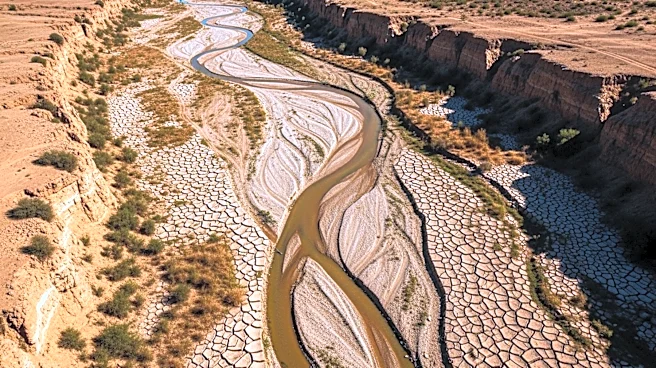
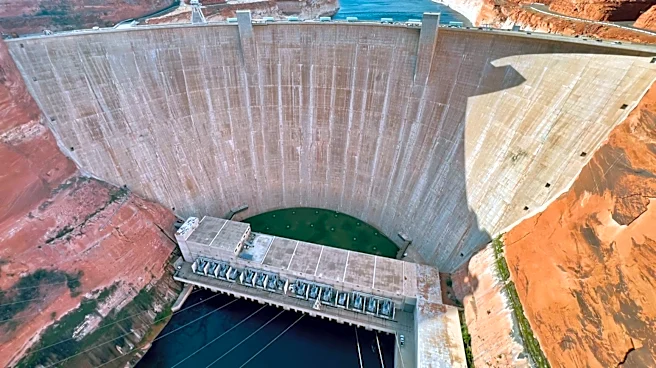
of up to 3 million acre-feet per year for California, Arizona, and Nevada, which could amount to 40% of their combined water allotments. This comes as the river's largest reservoirs, Lake Mead and Lake Powell, face severe depletion. The federal government has stepped in after states failed to reach a consensus on water use reductions, with negotiations deadlocked between downstream and upstream states. The Bureau of Reclamation is expected to announce its decision in the summer.
Why It's Important?
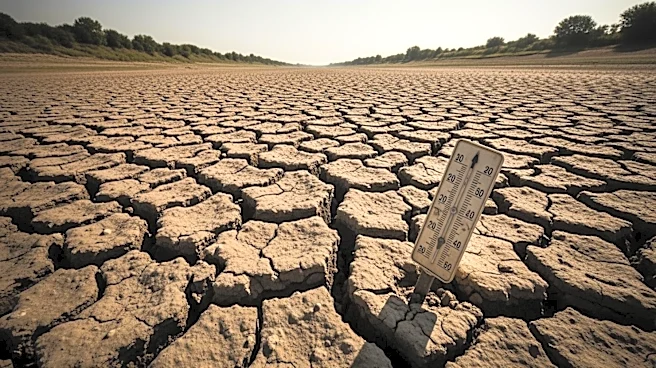
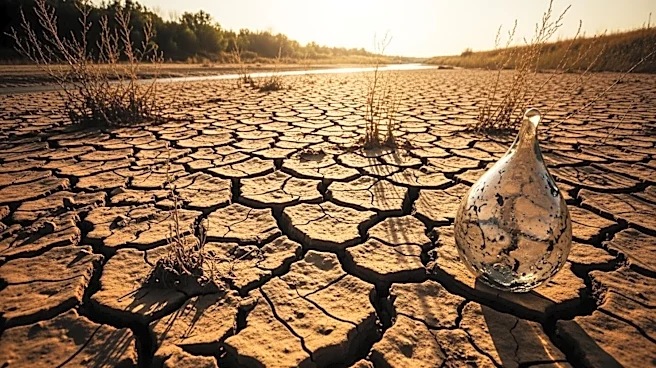
The proposed water cuts are significant as they could drastically affect water availability for millions of people and vast agricultural lands in the Southwest. The Colorado River supports about 35 million people and 5 million acres of farmland. The cuts could lead to increased tensions among states and potentially result in legal battles. The plan highlights the ongoing challenges of managing water resources amid climate change, which has intensified drought conditions in the region. The federal intervention underscores the urgency of finding sustainable solutions to water scarcity, which could have long-term implications for regional economies and ecosystems.
What's Next?
The Bureau of Reclamation will continue consultations with states, tribes, and Mexico to finalize the plan. The decision, expected in the summer, will likely prompt further negotiations among states to adjust water sharing agreements. Stakeholders, including state governments and agricultural interests, may push for revisions to the plan to mitigate impacts. The situation could lead to increased calls for federal and state investments in water conservation and infrastructure improvements to enhance water security in the region.