




What's Happening?
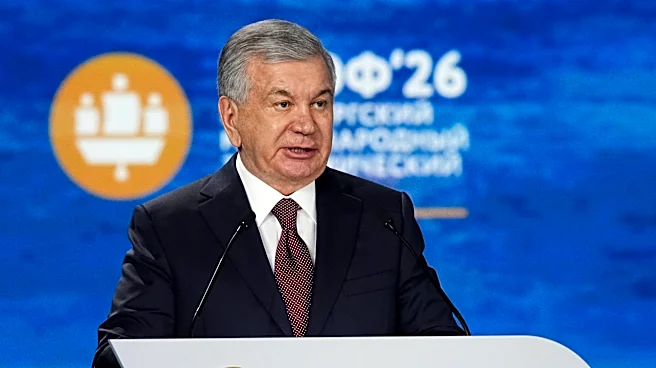
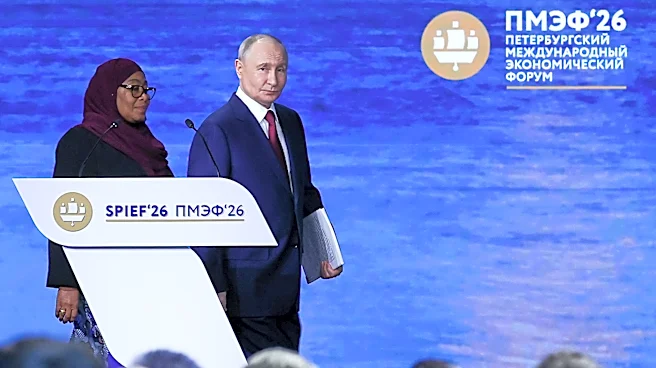
At the 29th St. Petersburg International Economic Forum, Russian President Vladimir Putin emphasized the growing influence of BRICS nations, which include Brazil, Russia, India, China, and South Africa. These countries now account for nearly 40% of global
GDP and have generated 49% of global economic growth over the past five years. The bloc's share of global trade and high-tech exports has significantly expanded, indicating a shift in economic and technological influence toward emerging markets. African leaders at the forum, such as Tanzanian President Samia Suluhu Hassan, highlighted Africa's potential as a future economic powerhouse due to its growing population and expanding middle class.
Why It's Important?
The increasing influence of BRICS nations represents a significant shift in global economic power from traditional Western economies to emerging markets. This shift could lead to changes in global trade patterns, investment flows, and technological development. As BRICS countries continue to grow, they may challenge the dominance of Western economies in high-tech industries and global trade. Africa's potential as a future economic engine further underscores the changing dynamics, with the continent poised to play a more significant role in global economic growth.
What's Next?
As BRICS nations continue to expand their influence, they may seek to establish new trade networks and economic partnerships, particularly with other emerging markets. The focus on high-tech industries suggests that these countries will continue to invest in technological advancements, potentially leading to increased competition with Western economies. Africa's role in this shift will likely grow, with the continent's leaders advocating for greater integration into global trade and investment frameworks.